Skip to content
In Gigabit Ethernet transceiver modules, we often see descriptions like 1000BASE-SX, 1000BASE-LX, 1000BASE-EX, 1000BASE-ZX, and 1000BASE-T. What are the meanings of these descriptions and what are their differences?
Below, YINGDA will provide a comprehensive review based on industry standards and years of practical experience.
1000BASE-T, SX, LX, EX, ZX are physical layer transmission standards for Gigabit Ethernet. They define what medium, wavelength, and transmission range SFP optical/electrical modules should use, making it convenient for users to choose according to their actual needs. And the specific standards we often see, such as 1000BASE-SX, LX, EX, ZX, mostly belong to the 1000BASE-X family.
What is 1000BASE-X?
1000BASE-X is the general term for all “gigabit fiber (and short distance copper) physical layers” in the IEEE 802.3 standard, characterized by the use of 8B/10B line coding.
What standards are included in the 1000BASE-X family?
According to IEEE standards, the official members of the 1000BASE-X family include:
| Member Standards | Medium | Wavelength | Max. Distance | Remark |
| 1000BASE-SX | Multimode fiber | 850 nm | 220 m – 550 m | The most common, corresponding to SFP optical modules |
| 1000BASE-LX | Single mode/multimode optical fiber | 1310 nm | SMF 5km (earliest standard)/10km (revised) | Common, corresponding to SFP optical modules |
| 1000BASE-CX | 150 Ω shielded balanced copper cable | – | 25 m | Used for short-range interconnection within the rack, phased out |
| 1000BASE-BX10 | Single mode fiber (single fiber bidirectional) | Downward 1490 nm/Upward 1310 nm | 10 km | Save half of the fiber optic cable |
From the table above, we can see that 1000BASE-X=”Gigabit Optical Port (and Short Copper Cable) Standard Family”, which includes members such as SX, LX, BX10, etc. When you see an 1.25 g SFP module labeled as “1000BASE-SX” or “1000BASE-LX”, it is a member of the 1000BASE-X family.
In practical applications, we often see descriptions such as 1000BASE-EX (40km) and 1000BASE-ZX (70-80km, some also called 1000BASE-LH), but they do not belong to the IEEE 1000BASE-X standard, but are enterprise/telecommunications level long-distance private extensions extended by various optical module manufacturers on the basis of LX with the same coding system. But in the market, they are often classified as “1000BASE-X type optical modules” for sale.
Below are detailed introductions to several standards:
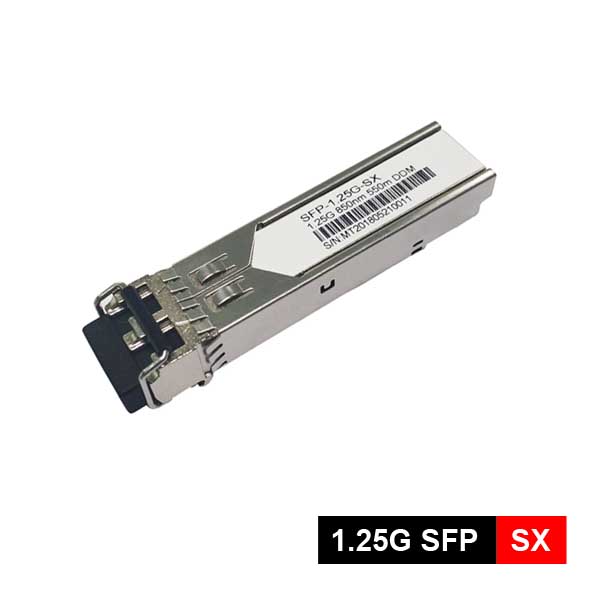
1000BASE-SX: Short distance multi-mode, low-cost solution for machine rooms
Specially designed for use with multimode fiber, the 1000BASE SX SFP transceiver module MMF 850nm is one of the lowest cost fiber networking solutions. In actual deployment:
- 50 Uum multimode fiber can reach up to 550 meters
- 62.5um multimode fiber can reach up to 220 meters
- On a specific optimized fiber optic cable, the maximum support is up to 1 kilometer
1000BASE-LX: Main player, compatible with single-mode and multi-mode fiber
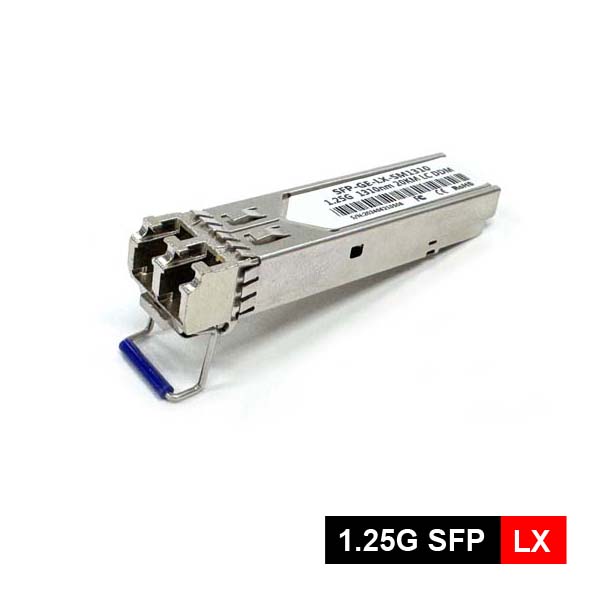
The most flexible choice for backbone network construction, the 1310 SFP module is one of the most widely used gigabit standards
- Single mode fiber (SMF): Supports up to 10 km
- Multi mode fiber (MMF): Supports up to 550 m
1000BASE-EX: Relays with extended distances exceeding 10 km
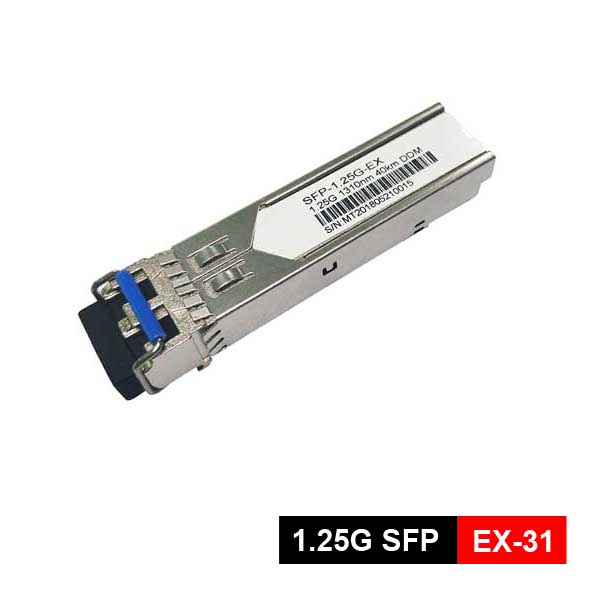
It was born to solve the scenario where LX (10 km) is not enough, but ZX (80 km) is “too forceful”. It uses the same wavelength of 1310nm as the SFP 1G LX module, but uses a more precise laser internally, supporting a maximum of 40 km.
1000BASE-ZX: The choice for ultra long distance backbone
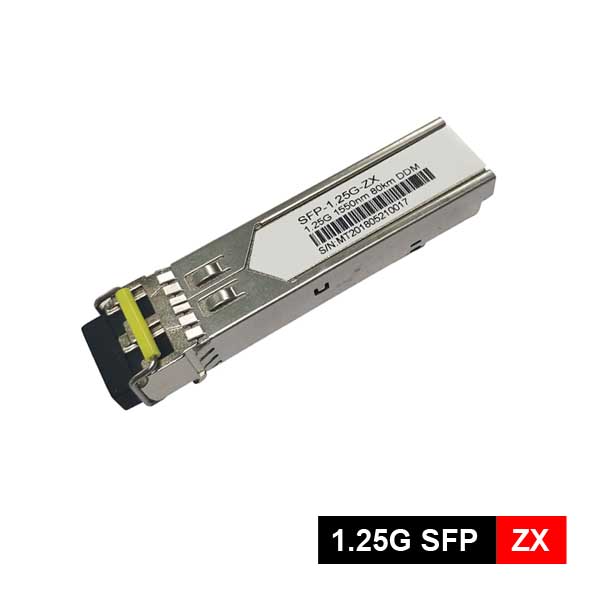
A solution designed specifically for ultra long distance backbone transmission, using 1550nm wavelength, typically used for operator grade and cross campus backbone networks:
What is 1000BASE-T?
1000BASE-T is a technology defined by the IEEE 802.3ab standard for implementing Gigabit Ethernet over copper cables. Its core feature is to achieve a transmission speed of 1000Mbps (1Gbps) and a maximum distance of 100 m on ordinary twisted pair cables of Cat5e or higher. It is a SFP copper transceiver, a cost-effective choice within a hundred meters. When the 100Mbps or 1G RJ45 ports are not sufficient, the idle SFP slots of the switch can be converted to standard ports. Supports adaptive speed of 10/100/1000Mbps.

Core difference: 1000BASE-X vs 1000BASE-T
The biggest difference between 1000BASE-T and 1000BASE-X (fiber optic) is that 1000BASE-T directly uses existing network cables without the need for rewiring. The fundamental difference between the two lies in the encoding method and physical medium:
- 1000BASE-X: Using 8B/10B encoding, the physical medium is almost entirely fiber optic (except for the outdated CX copper cable). The corresponding interface is the SFP optical module slot (for inserting optical modules or dedicated gigabit electrical port module SFP-RJ45).
- 1000BASE-T: Using more complex PAM-5 encoding and echo cancellation, the physical medium is Cat5e and above twisted pair copper cable (RJ45 interface), used to upgrade existing copper cable wiring to gigabit.
Summary of Various Standards
Yingda has compiled the main differences between these standards for your quick comparison.
Application Key Points Reminder
In actual deployment, there are two points that need special attention:
- Optical attenuator: When using 1000BASE LX LH SFP transceiver for transmission shorter than its typical distance (such as 20 km), an optical attenuator needs to be installed in the fiber optic link, otherwise excessive optical signals may permanently damage the receiving end.
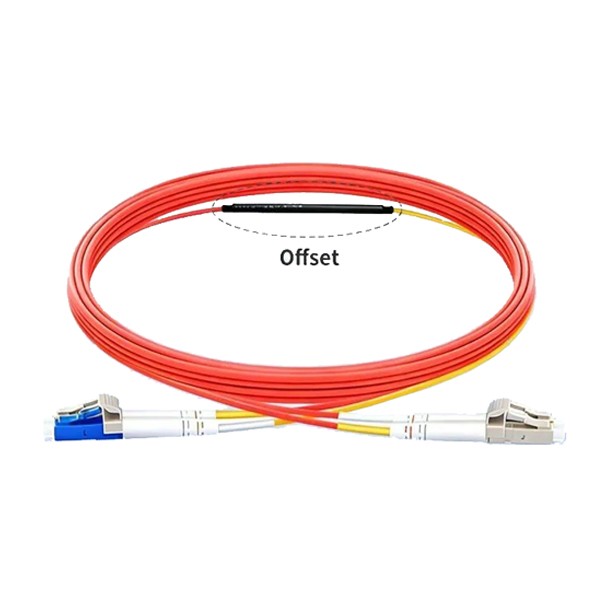
- Mode conversion patch cable: If the 1000BASE LX LH SFP transceiver module is applied to traditional multimode fiber (such as 62.5 um), a Mode Conditioning Patch Cable should be used at the transmitting end to avoid “differential delay” causing a sudden drop in transmission distance.

Yingda can provide different types of SFP modules that meet the above standards. If you have further requirements, please let us know the brand of switch you are using, the required transmission distance, wavelength, fiber optic interface and other product details, and we will provide the best quotation as soon as possible. Contact us now!