
 Skip to content
 The 40G QSFP+ (Quad Small Form-factor Pluggable Plus) module is a compact, hot-pluggable optical transceiver, it is the most prevalent form factor in the 40G Ethernet era, primarily used in data centers, enterprise core networks, and high-performance computing networks. It achieves a total bandwidth of 40Gbps by parallel transmission across four 10Gbps channels.
Yingda can provide QSFP form factor pluggable transceiver modules with best QSFP price. All products are produced with brand new materials and high-end chips, with 100% pass testing and comprehensive compatibility testing. They are widely compatible with switches and servers from brands such as Mikrotik, Cisco, HPE, Huawei, ZTE, Ruijie, Dell, etc.
The 40G QSFP+ module family is huge, and there are many different classifications to different distances and scenarios. If classified according to fiber optic interfaces, there are three types: MPO, duplex LC, and simplex LC (BIDI). For the convenience of comparison, Yingda has compiled their core parameters into the following table:
Module Type | Optical Interface | Fiber Type | Maximum Distance | Wavelength | Typical application |
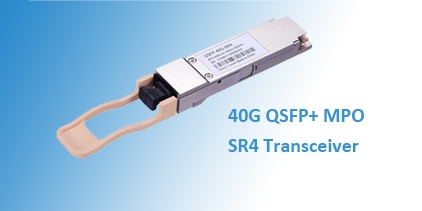
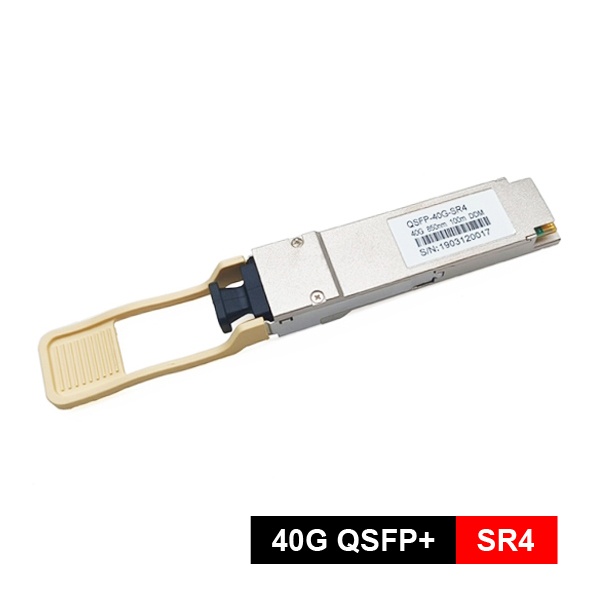
SR4 | MPO/MTP (12 Core) | MMF(OM3/OM4) | 100m / 150m | 850nm | Internal short-distance interconnection within the data center, from servers to TOR switches |
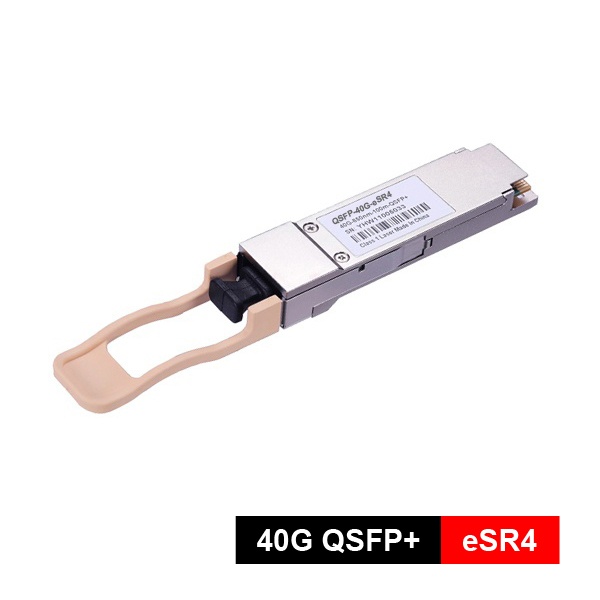
eSR4 | MPO/MTP (12 Core) | MMF(OM3/OM4) | 300m / 400m | 850nm | Medium-range multimodal scenario, farther than SR4 and more economical than LR4 |
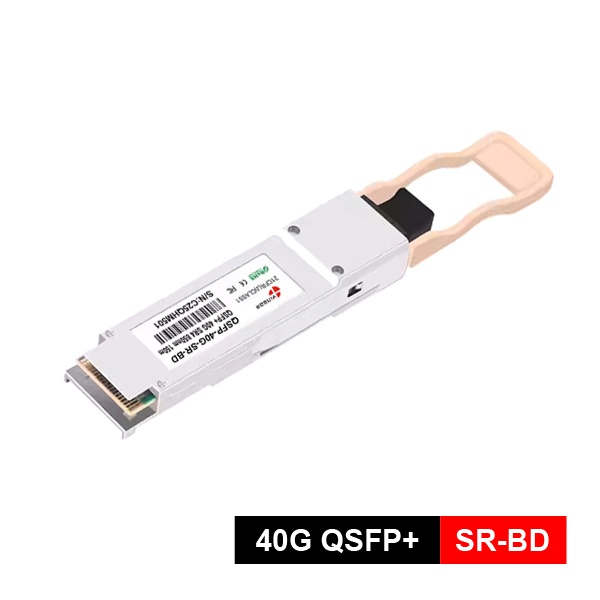
BiDi | Duplex LC | MMF(OM3/OM4) | 100m / 150m | 850nm & 900nm | Fiber resources are tight, with bidirectional transmission on a single fiber saving 50% of the fiber |
PSM4 | MPO/MTP (12 Core) | SMF(OS2) | 2km / 10km | 1310nm | Single-mode parallel scenario, which reduces wavelength management costs compared to LR4 but consumes more fiber |
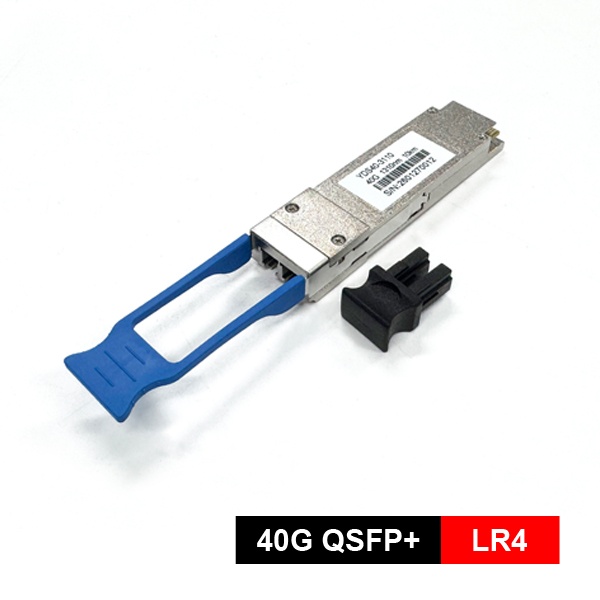
LR4 | Duplex LC | SMF(OS2) | 10km | CWDM4(1271,1291,1311,1331nm) | Metro/园区 standard long-distance solution, the most mainstream 10km single-mode module |
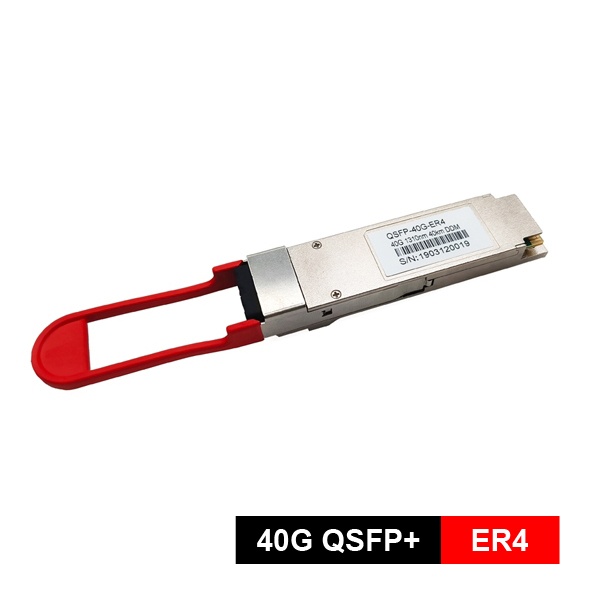
ER4 | Duplex LC | SMF(OS2) | 40km | CWDM4(1271,1291,1311,1331nm) | Metropolitan Edge, Telecom-grade Long-distance Transmission |
To select the appropriate 40G QSFP+ optical module, simply follow these three steps to easily resolve the issue
Step 1:
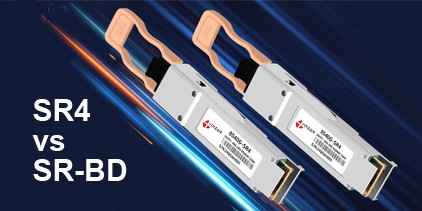
For distances under 100 meters, SR4 is the cost-effective choice. For 100-400 meters, eSR4 is recommended. If operating on a 10G network, SR-BD should be selected. For distances exceeding 400 meters, single-mode LR4, PSM4, or ER4 must be used.
Step 2
Interface adaptation directly determines whether the connection is feasible. For MPO interfaces, select SR4, ESR4, or PSM4 optical modules. For LC interfaces, consider models such as SR-BD, LR4, or LX4.
Step 3
40G technology is highly mature, so there’s no need to purchase the most expensive original equipment. However, it’s essential to buy third-party modules clearly labeled as compatible with your existing switch brands (e.g., Huawei, Cisco, H3C, Aruba, etc.). Yingda will conduct pre-adaptation testing in advance.
Mass production of products with short lead times.
Yingda 40G QSFP module are the most competitive price based on the best quality. We keep long term reliable in-between-after sales service.
40GB SFP modules are mainly used for internal data centers (ToR switch uplink, server access), campus network aggregation/core layer, high-performance computing clusters, and video transmission requiring high bandwidth.
No. QSFP 40G BiDi uses dual wavelength bidirectional technology (simultaneous transmission and reception on one fiber), while QSFP SR4 40G uses 4-channel parallel transmission. Their number of optical channels and wavelength planning have significant differences, making it impossible to establish a link. The QSFP BIDI transceiver must be paired with the BiDi module on the other end for use.
This is a very common issue, usually caused by the following reasons, which can be investigated in order through physical compatibility, forced speed and self negotiation, optical path issues, firmware and driver versions, etc
This is a known hardware and software issue. Some switches (such as Extreme X690) will enable a mode called "Clause 74 FEC" on the ports after inserting a 100G optical module. When switching back to the 40G QSFP+ transceiver, the mode was not cleared correctly, resulting in a conflict and causing the port status to be stuck in "Ready" and unable to UP. The solution is to upgrade the switch firmware or manually set the FEC mode of the port to cl74.
The high probability is hardware failure. AOC cables fix QSFP transceiver and fibers together and cannot be separated. When the device diagnosis shows that a specific channel (such as channel 1 and 2) is not receiving light in one end of the optical module, while the other end is transmitting and receiving normally, it usually means that the AOC cable itself is damaged. The most effective solution is to directly replace it with a new AOC cable for testing.
For the QSFP+ SR4 module with MPO interface, when the port is not UP, it may be due to MPO polarity not being TYPE B but TYPE A, or not being a 12 core MPO connector, abnormal power or limited transmission distance. Please investigate one by one.
High productivity efficiency, skilled front-line operators and strict production control ensure timely delivery.
High-precision testing equipment and top industry quality control system ensure high quality standards.
Long-term stable supply chain and cost control that changes in line with market trends ensure the best price
Sorry that there’s no information that interests you. Please fill in the feedback form so that we can improve.