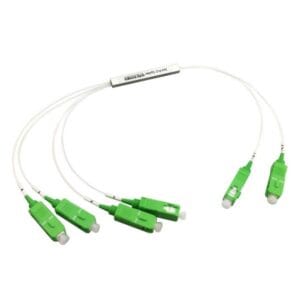

Home – Product – Fiber Splitter – Blockless PLC Splitter
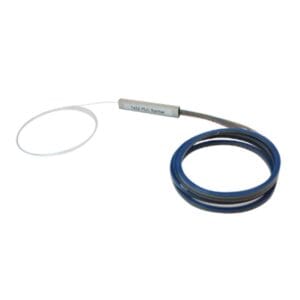
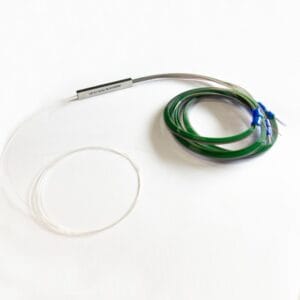
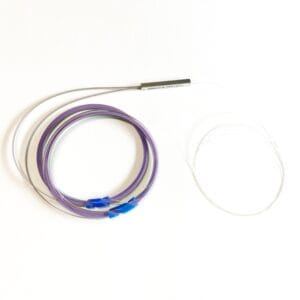
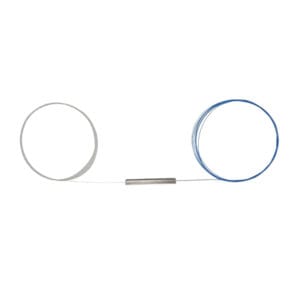
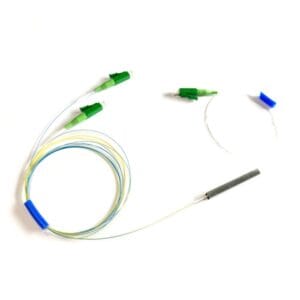
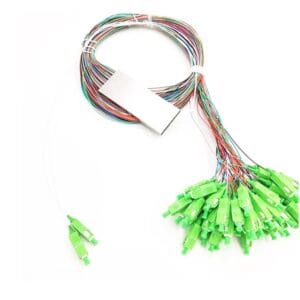
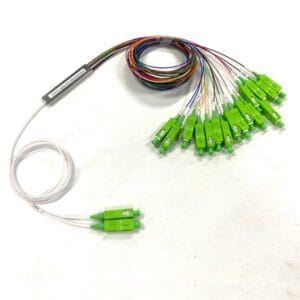
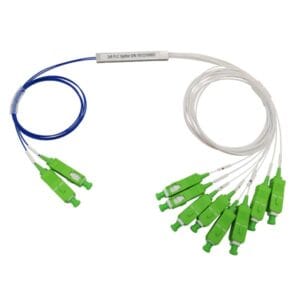
In fiber-to-the-home (FTTH) or data center cabling, the spatial adaptability and long-term stability of blcokless PLC splitters are crucial. The Yingda steel tube PLC splitter was designed for this purpose—its miniature steel tube enclosure saves valuable installation space while providing excellent pressure and shock resistance. Whether integrated into outdoor junction boxes or deployed in indoor distribution boxes, it operates stably within a wide temperature range of -40℃ to +85℃, providing a solid and reliable “invisible foundation” for your optical distribution network.
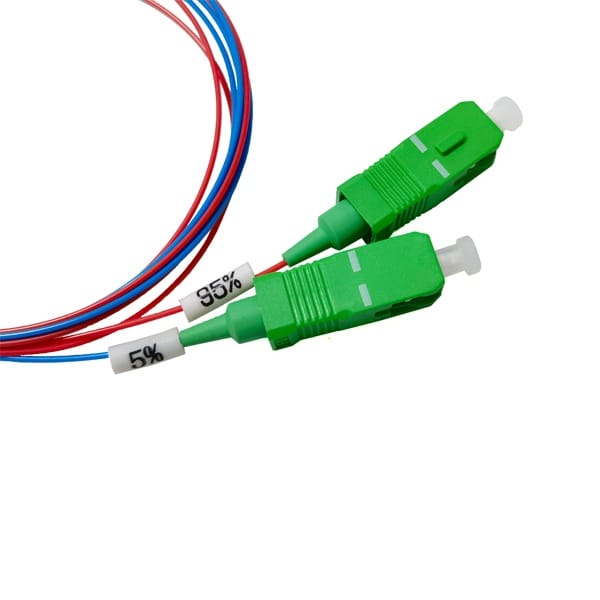
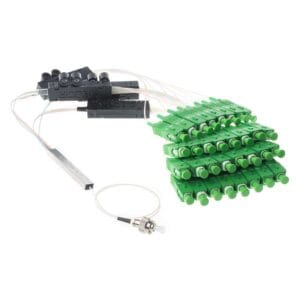
SC, FC, LC, SC, MPO, and more. UPC and APC options are also available.
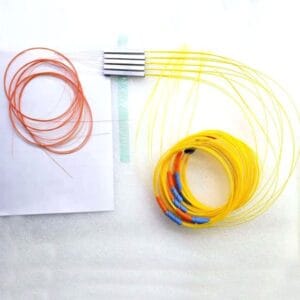
Standard G657A1, A2, B3, G652D, and other fiber options are available. Tubing color, material, and length are also customizable.
Standard splitting ratios and a large inventory of components allow for quick assembly and shipment, ensuring fast delivery.
All PLC splitters undergo high and low temperature cycling tests, ensuring stable and reliable performance in harsh environments.
Support silkscreen printing of your logo, serial number, part no., labeling, and packaging to meet your marketing and promotional needs.
| Number of channels (split ratio) | Steel tube dimension (Length × Width × Depth, mm) | Fiber output type |
|---|---|---|
| 1×2, 1×4, 1×8 | 40 × 4 × 4 / 40 × 7 × 4 | Bare fiber type / Loose tube type |
| 1×2, 1×4, 1×8 | 60 × 7 × 4 / 55 × 7 × 4 | 900μm loose tube |
| 1×16, 2×16 | 60 × 12 × 4 | 900μm loose tube |
| 1×32, 2×32 | 80 × 20 × 6 | 900μm loose tube |
| 1×64, 2×64 | 100 × 40 × 6 / 100 × 40 × 8 | 900μm loose tube / Ribbon fiber |
The core differences between Blockless and Bare Fiber PLC splitters lie in their installation methods, port configurations, and protection levels, which determine their suitability for different application scenarios.
| Item | Blockless PLC Splitter | Bare Fiber PLC Splitter |
|---|---|---|
| Port Form Factor | Typically Pre-terminated connectors (SC/LC/FC, etc.), eliminating the need for on-site splicing; plug and play. | Both ends are bare fibers unconnectorized and must be spliced on site. |
| Encapsulation Protection | Compact stainless steel tubing encapsulation provides enhanced physical protection and improved environmental stability. | The internal chip is also encapsulated in a stainless steel tube, but the external optical fiber is exposed and requires additional protection during use. |
| Installation Method | Plug-in design allows for direct connection to equipment after connector cleaning, requiring minimal skill from installation personnel and offering quick and efficient operation. | Welding type requires professional welding machines and skilled technicians, which is time-consuming and increases potential failure points. |
| Application Scenarios | Fiber optic distribution boxes, network cabinets, and other applications requiring convenient connectivity and robust protection. | Fiber optic splice enclosures and test instruments where space is extremely limited and frequent disassembly and assembly are not required. |

In fiber optic network deployment, PLC and FBT are the two mainstream splitter technologies. PLC splitters use semiconductor photolithography to achieve optical power distribution on a chip, supporting a full 1260~1650nm wavelength range with split ratios up to 1×128 and excellent uniformity, plus superior temperature stability (-40°C~85°C). FBT splitters, made through fused biconical tapering, are more cost-effective but only support specific wavelengths (e.g., 1310/1550nm), typically offer split ratios no higher than 1×8, and suffer from degraded uniformity at higher split ratios.
PLC splitters are ideal for FTTH, PON, and other large-scale network deployments, while FBT splitters suit low-ratio, budget-sensitive small-scale applications.
Read the full comparison: PLC vs FBT Splitters – Which One to Choose?
The core differences in the application of blockless PLC splitters in different scenarios lie in their “packaging form” and “connector configuration.” The splitting ratio itself is universal, and can be selected as needed for each scenario. It’s like the same “engine” installed in different “casings” to adapt to different environments.
Core application. In fiber-to-the-home/building/room ODN networks, it performs final-stage optical splitting before the light enters the home.
Packaging and Integration: Commonly used within fiber distribution boxes or fiber optic splice boxes. This box-type integration makes field installation faster and also protects the splitter. Common splitting ratios are 1×8, 1×16, and 1×32, with SC connectors.
Core application. In passive optical networks such as EPON/GPON, it enables the uniform distribution of optical power from one OLT port to multiple ONUs.
Splitting ratio: This scenario has a clear requirement for the number of splitting paths (1xN/2xN). Common models with uniform splitting ratios include 1×4, 1×8, 1×16, and 1×32, and most of them use SC/APC connectors.
Standard application. In broadcast networks, it is used to distribute the optical power of television signals to multiple receiving points.
Connector type: This scenario often requires the use of APC (Angled Physical Contact) connectors to reduce reflections and ensure signal quality.
Standard application. Used for optical signal distribution and management within campus networks or data centers.
Package and Connectors: In addition to being used in patch panels, it can also be integrated into standard chassis such as 1U rackmount LGX boxes, and uses LC connectors to adapt to high-density panels.
Typical Application. The small size advantage of the steel tube case makes it particularly suitable for installation inside space-constrained splice enclosures and distribution boxes.
Packaging Form: This is a key difference from ABS box-type, LGX cassette spliter or rack-mounted splitters — bare fiber and steel tube types are the most common forms used inside junction boxes.
Primarily used in space-constrained environments such as fiber optic distribution boxes, fiber optic splice closures, rack-mounted ODFs, or network cabinets. Their compact size and easy installation make them widely used in FTTx, PON, CATV, and data center networks.
Mini PLC splitters typically operate within a temperature range of -40℃ to +85℃, conforming to Telcordia GR-1221/GR-1209 standards. They feature low insertion loss, low polarization-dependent loss, and excellent mechanical stability, enabling long-term stable operation in harsh environments.
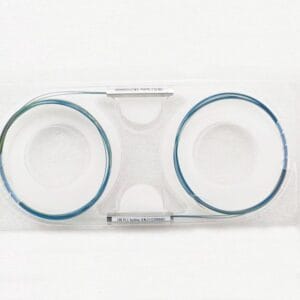
The standard protection package for blockless splitter is blister box, 1pc per box, or 2pc/box. Cost effective package like plastic bag can be offer upon request.
Before buying, please care about the split ratio, insertion loss, return loss, uniformity, connectors, fiber length, polarization dependent loss, directivity, etc, which should compliance with your project request.
Yingda mass production is high efficiency, standard orders will only take 1 week around, if large quantity orders, will make special time schedule for you.
The primary advantage is its compact blockless steel tube housing. A mini PLC splitter uses a miniature 0.9mm loose tube tail, allowing it to snap directly into standard fiber optic splice trays or tight terminal blocks. In contrast, bulkier ABS splitter models require much larger dedicated routing space inside outdoor enclosures.
We manufacture all our blockless splitters with premium G.657A1 or G.657A2 bend-insensitive single-mode fiber, or extrem bend sensitive G.657B3 fiber. This specific fiber geometry allows a much tighter bending radius within dense distribution boxes without experiencing micro-bending loss, ensuring flawless link performance and structural durability during field installation.
We wholesale these units with premium low-loss SC/APC, SC/UPC, or LC/APC connectors, or in un-terminated bare ends. Our 0.9mm input/output pigtails utilize standard TIA-598 color-coded tubes (or individual numeric flag bands) to guarantee effortless fiber tracking and rapid port cross-connecting for telecom technicians.
Need a custom solution or bulk pricing? Get a Free Quote within 2 hours!