...

10G SFP+ Module

10G SFP+ Module (Enhanced Small Form factor Pluggable) is currently the most widely used form of hot pluggable, miniaturized 10Gbase SFP module packaging. It is an enhanced version of SFP, with a smaller size, lower power consumption, and higher port density than older XFP modules. It is widely used in switches and network cards, with the core advantage of converting electrical signals into optical signals and achieving high-speed data transmission of up to 80-100 kilometers through optical fibers.

Application

  • Data Center: As the mainstream connection from servers to TOR switches, it is used to achieve high-speed interconnection within the data center.
  • Campus Network: As the backbone link between the core layer and the aggregation layer, it supports smooth upgrades from 1G to 10G.
  • Telecom: Used for forward/intermediate transmission of 5G base stations and business aggregation of metropolitan area networks.
  • WDM: In areas with scarce fiber resources, network expansion is achieved by deploying CWDM/DWDM modules.
  • Upgrading existing copper cables: In an environment where Cat6a network cables have been deployed, using 10GBASE-T electrical port modules can directly upgrade to 10 Gigabit speed.

Features

  • Hot pluggable: Supports online plug or un-plug without turning off the device power.
  • DDM/DOM function:digital diagnostic monitoring. Real time monitoring of parameters such as temperature, voltage, bias current, and transmission and reception optical power of the module.
  • High density and low power consumption: Compared to XFP transceiver (3.5-4.5W), SFP+ typically has a power consumption of around 1W-1.5W (slightly higher for electrical port modules, about 2.5W).
  • Compatibility: 10Gbase SFP+ compatible with SFP 1G optical modules, but not vice versa (SFP ports cannot recognize SFP+ modules).

10G SFP+ Modules Manufacturer and Customize

Yingda is a Chinese SFP module manufacturer and wholesaler, we committed to providing customers with with stable quality modules. No matter how the market changes, quality is always the first priority. With long-term stable supply chain support and mature cost control, Yingda share the extra benefits with customers and promise to provide customers with the best quality and most competitive price and services, so that customers can stand out from many competitors.

All 10G SFP+ optical modules provided by Yingda comply with IEEE 802.3ae, SFF-8431, and SFF-8472 standards.

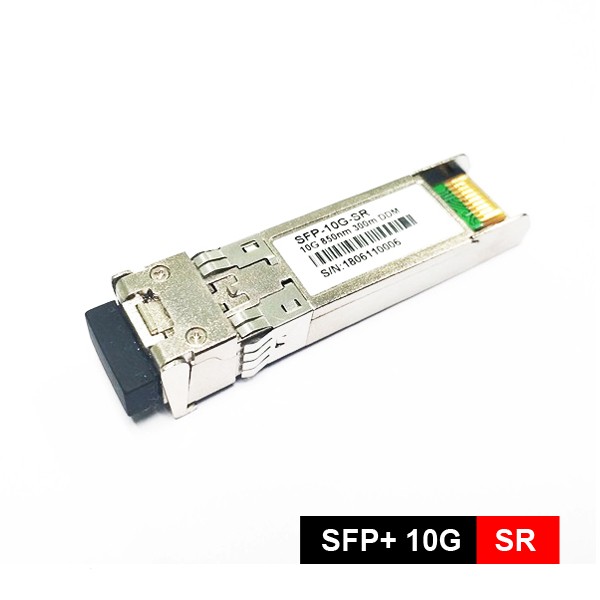
  • Transmission distance: 400m(OM4);300m(OM3)
  • Wavelength:850nm
  • Fiber type: MMF
  • Interface:Duplex LC
  • Laser: VCSEL + PIN
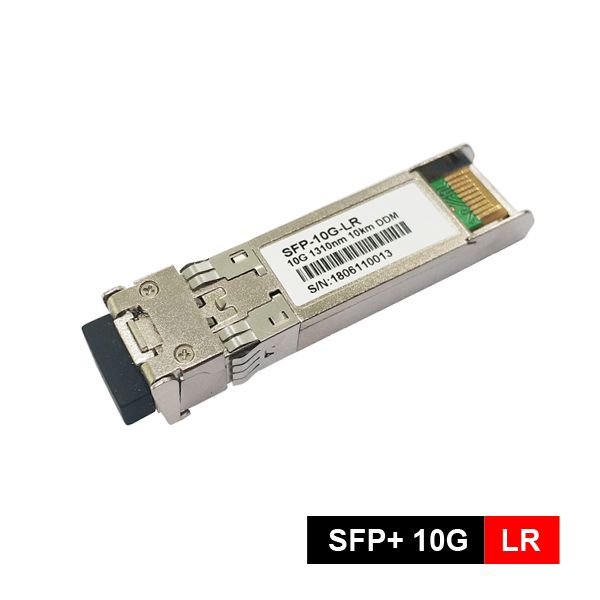
  • Transmission distance: 10km
  • Wavelength:1310nm
  • Fiber type: SMF
  • Interface:Duplex LC
  • Laser: DFB + PIN
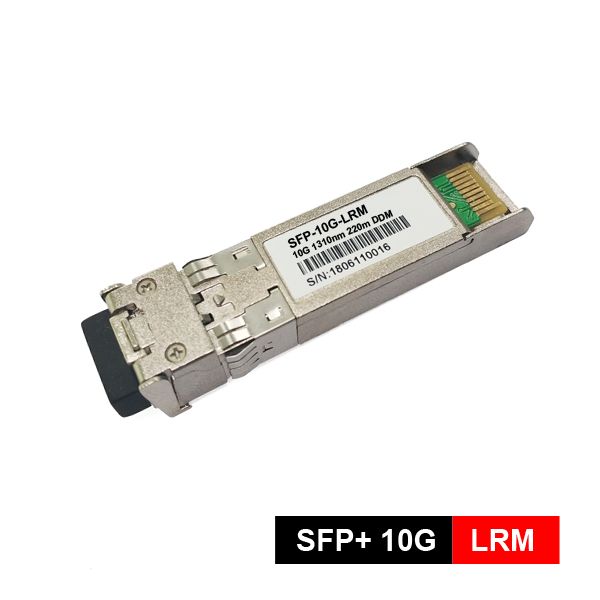
  • Transmission distance: 220m
  • Wavelength:1310nm
  • Fiber type: MMF
  • Interface:Duplex LC
  • Laser: FP + PIN
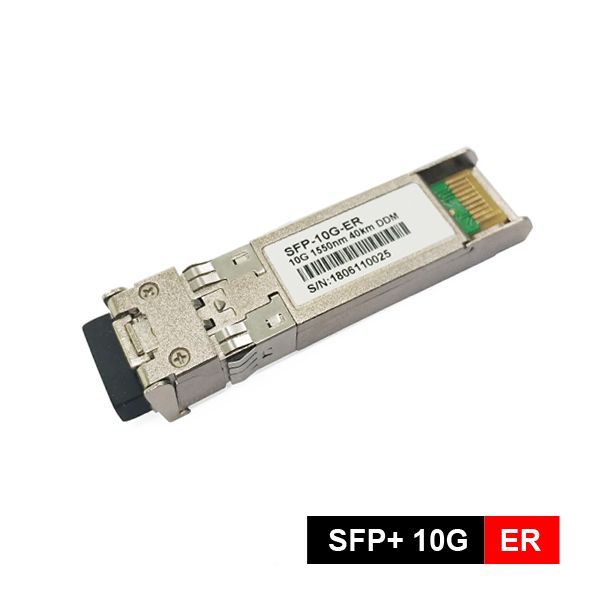
  • Transmission distance: 40km
  • Wavelength:1550nm
  • Fiber type: SMF
  • Interface:Duplex LC
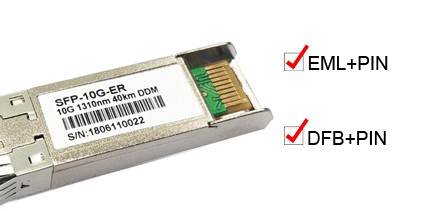
  • Laser: EML+PIN
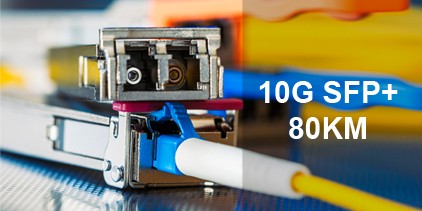
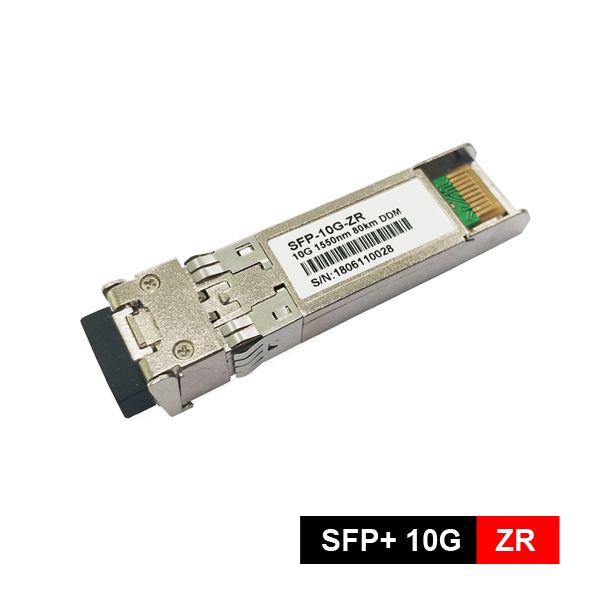
  • Transmission distance: 80km
  • Wavelength:1550nm
  • Fiber type: SMF
  • Interface: Duplex LC
  • Laser: EML+APD
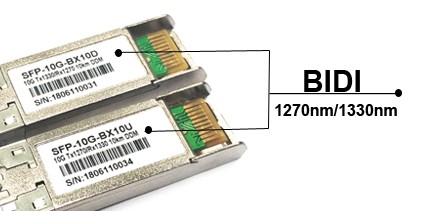
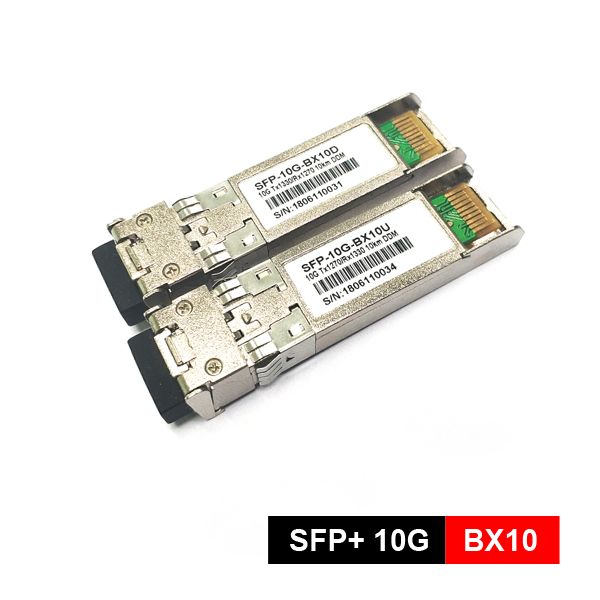
  • Transmission distance: 10km
  • Wavelength: 1270/1330nm
  • Fiber type: SMF
  • Interface: Simplex LC
  • Laser: DFB + PIN
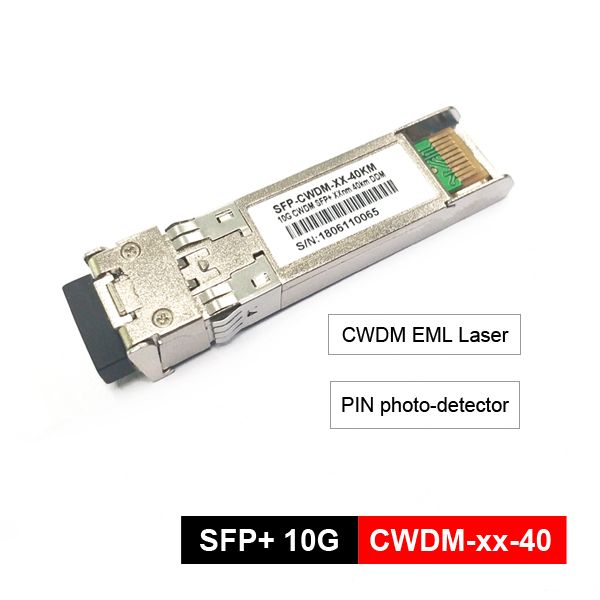
  • Transmission distance: 40km
  • Wavelength:CWDM-1270-1610nm
  • Fiber type: SMF
  • Interface:Duplex LC
  • Laser: CWDM EML + PIN
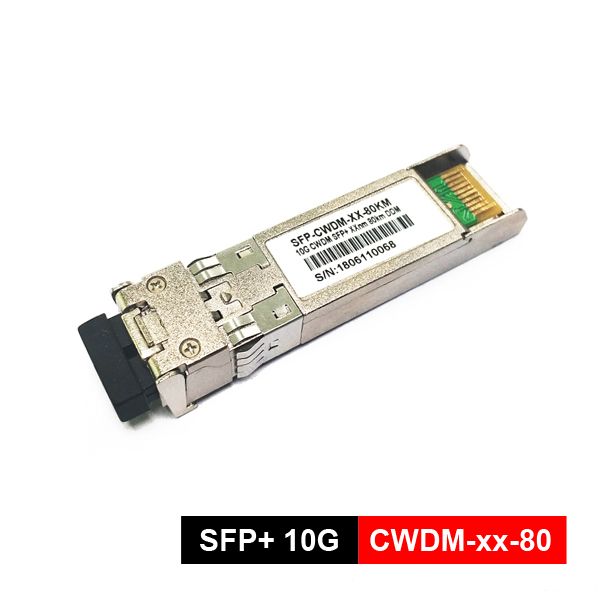
  • Transmission distance: 80km
  • Wavelength: DWDM-C&L band
  • Fiber type: SMF
  • Interface: Duplex LC
  • Laser: DWDM EML+APD

10G SFP+ Fiber Module Types

Based on the transmission medium (fiber optic or copper cable), transmission distance, and core technology, Yingda summarized a brief model list as below for customer reference:

Model

Fiber type

Optical interface

Max transmission distance

Core technology

10GBASE-SR

MMF

Duplex LC

300m (OM3) / 400m (OM4)

850nm VCSEL laser+PIN detector

10GBASE-LRM

MMF

Duplex LC

220m (OM1/2) 

FP laser+PIN detector, 1310nm single mode transceiver over multimode fiber

10GBASE-LR

SMF

Duplex LC

10km -20km

1310nm FP/DFB laser+PIN detector

10GBASE-ER

SMF

Duplex LC

30-40km 

1550nm DFB/EML laser +PIN/APD detector

10GBASE-ZR

SMF

Duplex LC

60-80km+

1550nm EML laser+PIN/APD detector

10GBASE-BIDI

SMF

Simplex LC

10-80km

DFB/EML laser, PIN/APD detector,1270/1330nm, used in a pair

10GBASE-CWDM

SMF

Duplex LC

10-80km+

CWDM DFB/EML laser+PIN/APD detector, CWDM 1270-1610nm

10GBASE-DWDM

SMF

Duplex LC

10-80KM+ (Depends on the link)

Fixed or Tunable DWDM EML laser+PIN/APC detector, DWDM C&L band

Other Connection Methods: Non-optical Module Solution

In addition to the aforementioned 10 Gig SFP modules, there are three common connection methods in 10G networks:

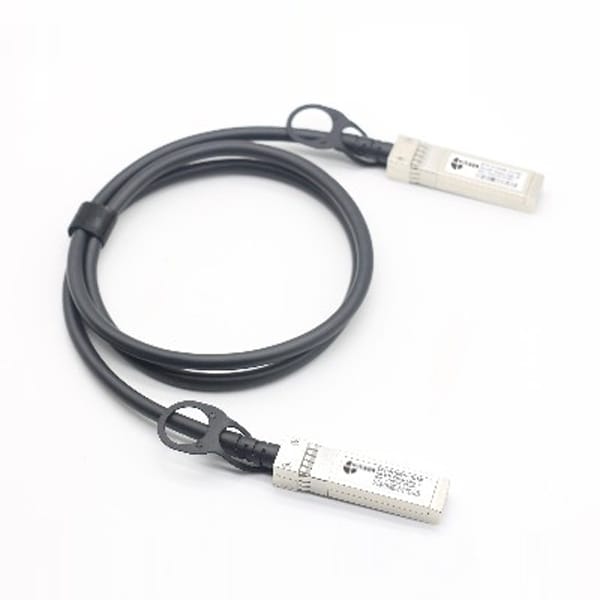
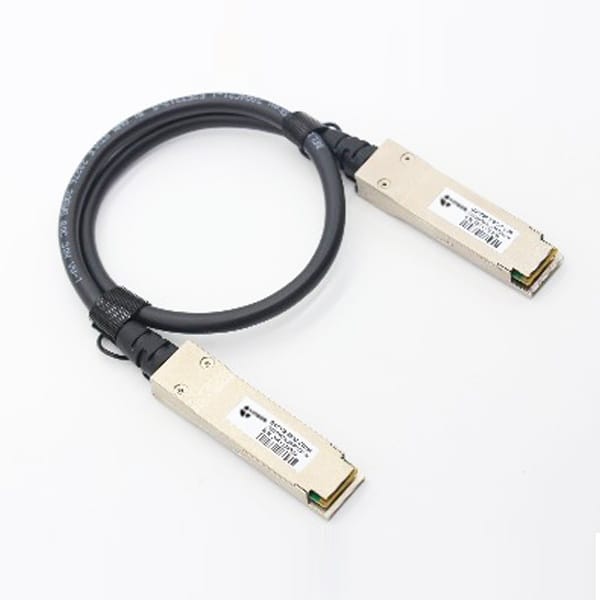
  • Form: The SFP+connector and copper cable are integrated at the factory and cannot be replaced.
  • Transmission medium: Copper cable.
  • Advantages: Extremely low cost and power consumption, usually only about 0.1W, very suitable for short-range interconnection inside cabinets.
  • Form: Like DAC, it is a fixed cable component.
  • Transmission medium: optical fiber cable.
  • Advantages: Finer and lighter than DAC, longer transmission distance (up to 300 meters), and anti electromagnetic interference, but slightly higher power consumption and cost than DAC.
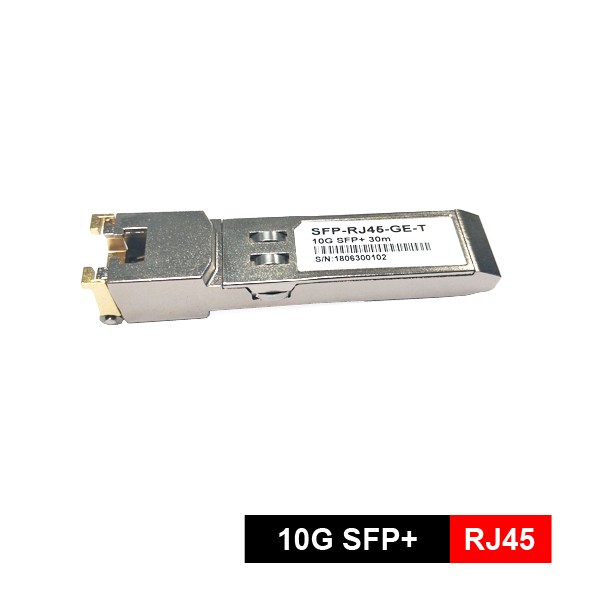
  • Form: The module has an RJ45 interface.
  • Transmission medium: Ethernet cable (Cat6a/Cat7).
  • Advantage: It can directly utilize existing copper cable wiring to achieve 10G transmission up to 30 meters away.

Precautions for Buying 10G SFP+ Modules

When you are planing to buy SFP+ 10G transceiver, please ensure to choose based on the actual transmission distance, existing fiber types, equipment brand, and project budget. Below are 10 TIPS to help you make a choice:

  1. Determine the distance: choose 10Ge SR (cheap and low-power) within 300 meters, and 10G LR within 10 km.
  2. Matching fiber: SFP SR10G must be connected to multimode (orange or blue-green), 10Gb LR/ER/ZR must be connected to single mode cable (yellow jacket), otherwise communication cannot be achieved.
  3. Fiber Polarity: For standard dual fiber modules, end-to-end connections must follow the principle of transmitting (Tx) to receiving (Rx) to ensure correct crossing of fiberpatch cables.
  4. Brand compatibility:Cisco, Huawei and other manufacturers usually have device lock codes, and YINGDA will burn codes that match mainstream brand devices in the module to achieve plug and play. Please confirm with Yingdathe brand information you need to be compatible with before purchasing, so that it can be used normally.
  5. Link budget cannot be ignored:The so-called “SFP10G 10km module” refers to the maximum achievable distance under perfect conditions. In actual deployment, every fiber optic connector and fusion point will experience losses. It is necessary to calculate the total link loss and reserve at least 3dB of redundancy to avoid packet loss due to insufficient power.
  6. DDM digital diagnostic monitoring: It is recommended to identify modules that support DDM functionality when purchasing. It allows you to view the temperature, voltage, bias current, and transmit/receive optical power of modules in real-time in the switch backend, making it the most intuitive tool for troubleshooting link faults.
  7. Pay attention to dispersion issues: SFP+ ZR transceivers may experience signal degradation due to dispersion during long-distance transmission of 80km. According to the actual link situation, additional dispersion compensation modules (DCM) may need to be added to ensure signal quality.
  8. Hot plugging operation:10 GbSFP+ supports hot plugging, but during operation, hold the module’s pull tab and slowly pull it out to avoid damaging the interface.
  9. Port cleaning:The optical ports and fiber optic connectors of the optical module are extremely sensitive. Before inserting the fiber optic cable, be sure to use a specialized cleaning tool (such as a one click cleaning pen) for cleaning. Dust is a common cause of optical link failures.
  10. Dust prevention: When not in use, be sure to wear dust caps on 10G SFP modules and fiber patch cordsto prevent dust and physical damage.
10G SFP Module Buying FAQ

Yes. Generally speaking, APD detectors are used for distances above 40km to increase link attenuation redundancy. However, due to cost reasons, PIN can also be used. In addition, 1550nm wavelength has less loss than 1310nm wavelength, so it can be used in certain scenarios.

The 10GE SFP transceiver modules are in mass production, it will take about 1 week to be ready. If urgently need, please inform us in advance.

SFP transceiver can be inserted into SFP+ ports, which will automatically "slow down" to 1Gbps to match the SFP transceiver. On the contrary, it is not possible.

For better protection, we always use blister boxes for all 10 Gigabit SFP transceivers, but if you have any special request, let’s talk further.

Yingda adopts very refined cost management while ensuring quality, in order to provide more competitive prices to customers and strive to gain more profit margins for them. If there is a decrease in material prices, we will notify customers as soon as possible and offer discounts to them.

Timely Delivery

High productivity efficiency, skilled front-line operators and strict production control ensure timely delivery.

Quality Assurance

High-precision testing equipment and top industry quality control system ensure high quality standards.

Competitive Price

Long-term stable supply chain and cost control that changes in line with market trends ensure the best price

yingda logo for facebook 191x100

Why leave?

Sorry that there’s no information that interests you. Please fill in the feedback form so that we can improve.