Skip to content
The main difference between SFP 10G LR single mode 1310nm transceiver and 10G LR-S optical transceiver lies in the supported feature set and applicable scenarios, rather than transmission distance or speed. SFP 10G LR S is a simplified version (S-Class) long-distance module launched by manufacturers such as Cisco, which may support fewer specific functions (such as enterprise network characteristics, certain high temperature environments, industrial specifications) and may have lower power consumption, making it suitable for enterprise office networks, while ordinary SFP 10G LR single mode is suitable for harsh data center environments.
Both Commonality
Regardless of whether it is S-class or not, 10G LR optical modules have the following characteristics:
- Connector: Duplex LC (DLC)
- Speed: 10.3Gbps (10GBASE-LR).
- Wavelength: 1310nm.
- Fiber type: Single mode fiber (SMF).
- Distance: usually 10km, meeting the connection requirements of metropolitan area network and park network.
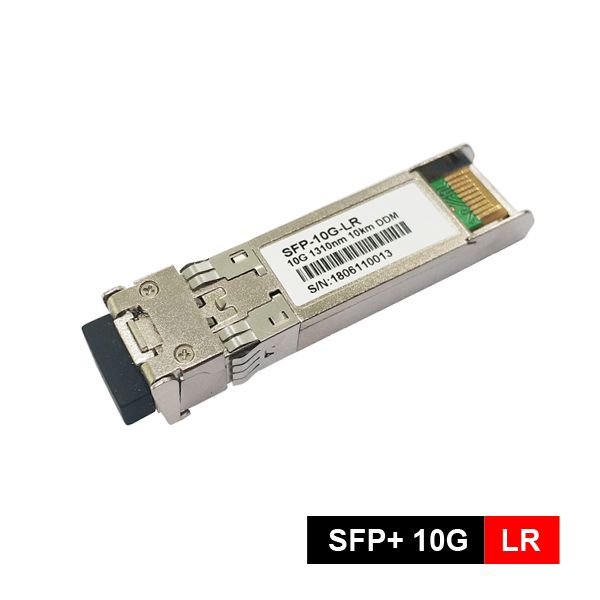
Core differences (taking Cisco 10G LR S as an example):
| Item | SFP 10G LR | SFP 10G LR S (S-Class) |
| definition | Standard version (such as SFP-10G-LR) | Cisco’s SFP-10G-LR-S module |
| feature | Fully functional, typically supporting a wider operating temperature range (such as industrial grade), more comprehensive in functionality, and suitable for more complex scenarios. | Eliminated some unnecessary protocol extensions or specific high-intensity industrial features. They are specifically designed for optimizing data center and enterprise network environments, typically supporting commercial grade operating temperatures (0 ℃ to 70 ℃), and are usually more cost-effective. |
| Cost and power consumption | Higher than S-class | The production cost is usually lower, and the power consumption is slightly optimized, which is conducive to high-density deployment. |
| industrial scenario | Both commercial and industrial grade are available | Commercial grade available, industrial grade unavailable |
How to choose between SFP 10G LR or SFP 10G LR S?
1. High density data center: Prioritize LR-S (S-class) optical modules, which can significantly save budget and reduce heat dissipation power consumption.
2. Strict industrial environment: If the computer room does not have air conditioning or is used in non-commercial environments, standard SFP 10G LR modules should be selected to ensure temperature adaptability.
3. Compatibility: If using a non Cisco brand switch, it is recommended to choose a universal LR optical module. If it is a Cisco device and there are no special industrial requirements, S-level modules can fully meet the needs.
4. Limited cost: If it is a scenario with limited budget, 10G LR-S can perfectly replace it.

Conclusion
There is no difference in transmission rate (10G) and distance (10km) between the two modules, with the main differences being functional characteristics, environmental adaptability, and cost.
According to the industry experience, they are compatible and replaceable in the vast majority of 10 km network scenarios, but the standard version usually supports a wider range of protocols and temperatures. Yingda can provide SFP 10G LR standard compatible optical transceiver for all applications, please contact us for quotation.