Skip to content
The wiring method of 100G optical transceivers mainly depends on the optical interface standards, transmission media (multimode / single-mode fiber), optical connector types (MPO/LC), and fiber cores.
Based on years of experience, YINGDA has conducted targeted analysis based on the above parameters and summarized the following table, which can help you quickly understand mainstream wiring solutions:
| Optical transceiver standard | Fiber type | Connector type | Max. Distance | Core technology and wiring characteristics |
| 100GBASE-SR4 | MMF OM3/OM4 | MPO-12 | 70-100m | Parallel multiplexing, using 8 core optical fibers (4 transmitters and 4 receivers), is currently the most mainstream short-range solution for data centers. |
| 100GBASE-PSM4 | SMF OS2 | MPO-12 | 500 m | Parallel single-mode, also using 8 fibers, with lower cost than LR4, suitable for single-mode transmission of about 500 m. |
| 100GBASE-CWDM4 | SMF OS2 | Duplex LC | 2 km | Coarse wavelength division multiplexing, using only one pair of optical fibers, achieves 100G through four wavelength multiplexing, which is the preferred solution for a distance of 2 km. |
| 100GBASE-LR4 | SMF OS2 | Duplex LC | 10 km | Long distance wavelength division multiplexing, similar to CWDM4, but with a higher power budget, supports transmission up to 10 kilometers away. |
| 100GBASE-ER4 | SMF OS2 | Duplex LC | 40 km | Extended distance, used for interconnecting metropolitan area networks or data centers, with a transmission distance of up to 40 kilometers. |
| 100G BiDi/eBiDi | MMF OM3/OM4 | Duplex LC | 100-150m | Bidirectional technology, using only one pair of multimode fibers and utilizing two wavelengths for transmission and reception, can save half of existing fiber resources. |
| 100GBASE-DR/FR/LR1 | SMF OS2 | Duplex LC | 500 m/2 km/10 km | Single wavelength, using only one pair of optical fibers and one wavelength (100G PAM4), is a new generation technology for the future, with simpler wiring. |
| 100GBASE-CR4 | Twinax copper wire | – | 3-5 m | Direct attach cables, with ultra-low power consumption and latency, are the most economical choice for short distance interconnection within or between adjacent cabinets. |
| 100G AOC | Active optical cable | – | <100m | AOC integrates optical transceivers and fiber optic cables, making it lighter, longer, and more flexible than copper cables, plug and play. |
How to choose the suitable wiring method?
Distance and cost are key factors
- Less than 5 meters (inside the cabinet): Priority should be given to 100GBASE-CR4 direct copper cable (DAC), which is the cheapest and lowest power consumption solution.
- Within 100 meters (cabinet room): 100GBASE-SR4 (MPO) is the most mainstream choice for data centers, with extremely high cost-effectiveness. If you don’t want to replace the existing LC duplex cabling system, 100G BiDi (LC) is a good alternative solution.
- 100-500 meters: This distance is the transition zone. If there is already a parallel single-mode fiber, PSM4 can be selected; Otherwise, CWDM4 (LC) or the new generation DR1 (LC) would be a more concise and modern solution.
- 500 meters to 10 kilometers: 100GBASE-LR4 (LC) is the absolute mainstay, using duplex LC interface, which saves a lot of fiber resources.
- 10-40 kilometers and above: 100GBASE-ER4 (LC) and 100GBASE-ZR4 (LC) are designed for long-distance transmission of 40 kilometers and 80 kilometers, respectively.
Distinguish Wiring interfaces: MPO vs. LC
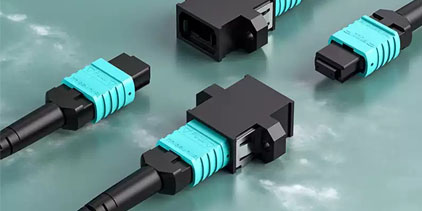
- MPO interface: commonly found in parallel modules such as SR4 and PSM4. An MPO-12 interface contains 12 optical fibers, of which 8 are actually used. Attention should be paid to the management of fiber polarity when wiring.
- LC interface: commonly used in wavelength division multiplexing modules such as CWDM4, LR4, BiDi, etc. The appearance is the same as that of a gigabit/ten gigabit module, using duplex LC patch cables for simpler wiring and more fiber saving.
New trend: Single wavelength technology (400G DR4 Breakout Solution)
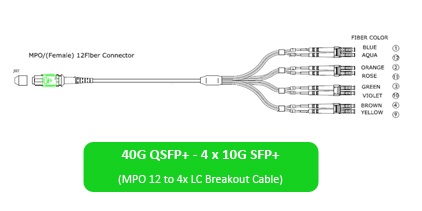
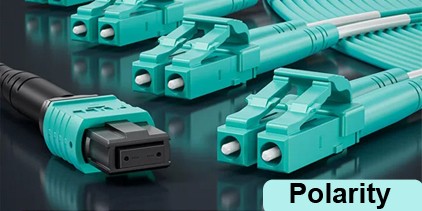
Represented by 100GBASE-DR/FR/LR1, they achieve 100G transmission on a single fiber using only one wavelength. Compared to the traditional LR4 that uses four wavelengths, this technology simplifies optical design and eliminates the need to replace fiber infrastructure when upgrading to 400G/800G in the future, making it a future oriented choice. It will be used with 400G to 100G Breakout Cable, that is MPO to LC breakout cable like below:

Advanced: Breakout wiring (QSFP28 to SFP28 Breakout Solution)
In addition to point-to-point connections, 100G optical transceivers are also commonly used for breakout wiring. For example, connect a 100G QSFP28 to 4x25G SFP28 ports through MTP fanout cables. This method is common in the “spine-leaf” network architecture, which can connect 4 x 25G servers and effectively improve the utilization of switch ports.