Skip to content
PAM4 (4-Level Pulse Amplitude Modulation) is a high-speed signal transmission modulation technique. It upgrades the traditional dual level (NRZ, non return to zero) to four different signal levels, enabling the transmission of 2 bits of data per symbol period, thereby doubling data throughput without increasing bandwidth. It is the core technology of next-generation high-speed interconnects such as 400G/800G/1.6T Ethernet and PCIe 6.0.
PAM4 Working Principle
To better understand, we can first take a look at traditional techniques:
- NRZ (Non Return to Zero Code, PAM2): Commonly used in traditional high-speed signals. It only uses two levels, high and low, representing the numbers “1” and “0” respectively. One signal cycle can only transmit 1 bit of information (2 to the power of 2=2 states).
- PAM4: It uses four different voltage levels (usually labeled as 0, 1, 2, 3 or -3, -1,+1,+3). Each level can correspond to a combination of 2 bits (00, 01, 10, 11). Therefore, one signal cycle can transmit 2 bits of information (2 to the power of 2=4 states).
| Modulation mode | NRZ (PAM2) | PAM4 |
| Number of levels | 2 (0,1) | 4 (00,01,10,11) |
| Information per cycle | 1 bit | 2 bits |
| Signal to Noise Ratio (SNR) | higher | Lower (more sensitive) |
| Rate at the same baud rate | benchmark | 2 times |
| application | 100G and below | 400G/800G/1.6T |
PAM4 technology doubles the data transmission rate while maintaining the same baud rate (symbol rate).
Why do we need PAM4?
With the development of artificial intelligence, cloud computing, and big data, the demand for bandwidth within data centers is exploding. In the past, relying on increasing frequency to improve network speed would encounter physical bottlenecks due to excessive signal loss (attenuation) in copper wires or optical fibers. PAM4 technology can double the bandwidth without significantly increasing the physical frequency, making it the core technology for upgrading from 100G to 400G, 800G, or even 1.6T Ethernet.
For example, a PAM4 link running at 28 Gbaud (28 million symbols per second) can achieve a transmission rate of 56 Gbps. NRZ can only reach 28 Gbps at 28 Gbaud. This is crucial for growing businesses such as cloud computing, AI computing power clusters, and video streaming, as it allows manufacturers to easily achieve single channel transmission rates of 50G, 100G, or even 200G without significantly increasing system clock frequency (which can lead to a surge in power consumption and costs).
PAM4 Advantages and Challenges
Advantage:
- Doubling bandwidth efficiency: At the same signal transmission rate, PAM4’s data transmission rate is twice that of traditional NRZ, effectively improving bandwidth utilization.
- Reduce frequency requirements: When reaching the same rate, the Nyquist frequency of PAM4 is only half of NRZ, reducing the frequency dependent loss of the transmission path.
- Cost saving: Network bandwidth can be expanded without the need for additional physical fibers or channels.
Challenge (Limitations):
- Higher Signal to Noise Ratio (SNR) requirements: By increasing the signal level from 2 to 4, the spacing between levels becomes smaller, making it more sensitive to noise, crosstalk, and distortion. In theory, PAM4 requires about 9.5dB higher signal-to-noise ratio than NRZ.
- More complex equipment: In order to ensure accurate signal transmission, the system usually needs to be equipped with technologies such as digital signal processing (DSP) and forward error correction (FEC), and the power consumption is relatively high.
- More sensitive to nonlinear distortion: Any small defect in the physical channel (such as fiber optic cables) can cause greater damage to PAM4 signals.
PAM4 Application
PAM4 has been widely used in various high-speed data transmission fields:
- Data Center Interconnection (DCI): The core standard for 400G, 800G, and 1.6T optical modules.
- 5G mobile carrier network: high-speed mobile network transmission.
- High speed copper cable/backplane: For example, the internal computer bus standard of PCIe 6.0/7.0, which supports higher motherboard communication rates, has also shifted to PAM4.
- Inter chip interconnection: a very short distance high-speed channel used to connect processors, memory controllers, and other chips.
What PAM4 Transceivers can Yingda Provide?
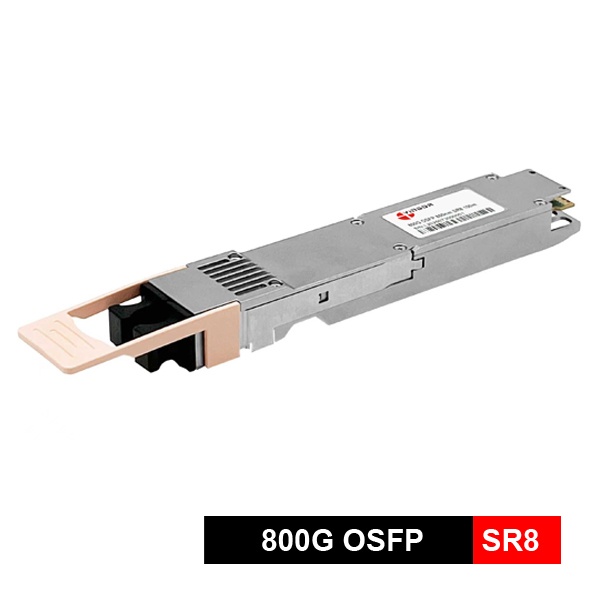
800G SR8 / DR8 / FR4 / LR4
- Transmission distance: 50-10km
- The AI core network comes standard with running 100G PAM4 or even 200G PAM4 on a single channel, achieving 800G speed through parallel stacking of 4 or 8 channels.
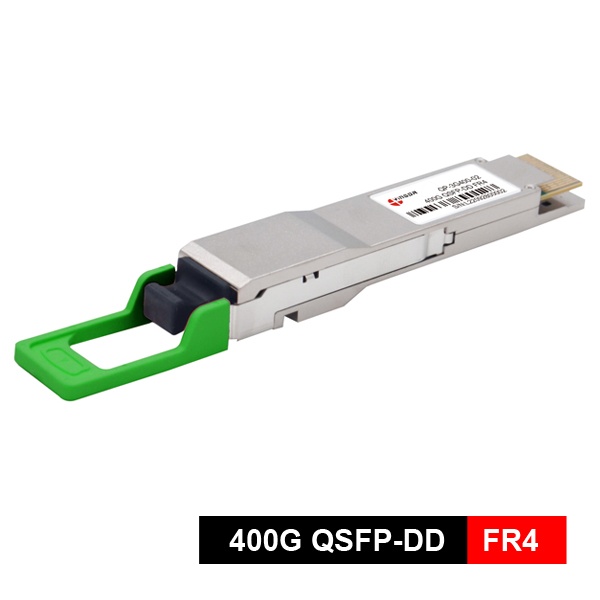
800G SR8 / DR8 / FR4 / LR4
- Transmission distance: 70m-2km
- The backbone of mainstream data centers mostly adopts the architecture scheme of 8 x 50G PAM4 or 4 x 100G PAM4, achieving 400G speed through 4 channels.
200G / 400G / 800G AOC Cable
- Transmission distance: 1m-100m
- Usually used for short distance interconnection of single racks or adjacent racks inside the computer room, QSFP56 or QSFP-DD packaging is adopted, and high-speed O/E conversion transmission is directly carried out through multiple PAM4 signals inside the cable.
Single Lambda 100G FR1/LR1/DR1 Series
- Transmission distance: 500m-10km
- In order to cope with the huge traffic throughput, 5G networks have introduced single wave 100G PAM4 technology in the middle transmission and some front and back transmissions, greatly reducing the number of internal lasers and lowering power consumption and costs.
✅Choosing PAM4 signal modulation mode for optical modules also requires high requirements for the matching optical fibers:
- Short distance: Inside data centers, usually use OM4/OM5 multimode fibers, which cannot be carried by OM1/OM2 fibers.
- For medium to long distances: such as base stations or cross machine rooms, standard OS2 fiber is used, mainly relying on the DSP chip inside the PAM4 transceiver for error correction (FEC) to ensure the stability of high-speed PAM4 signals.
Conclusion
PAM4 (4-Level Pulse Amplitude Modulation) is a high-speed signal encoding technique that uses four voltage levels to represent 2-bit data.
- Core value: Double the data rate without increasing signal bandwidth.
- Application scenarios: 400G/800G optical modules, PCIe 6.0, and all other interconnect interfaces that require extremely high speeds.
- Main cost: The signal quality requirements are extremely high, requiring more complex circuits and DSPs for error correction.
It can be said that PAM4 is a key enabling technology that drives the evolution of current data communication rates from 50G to above 200G.