Skip to content
In large-scale data centers or telecommunications projects, the use of substandard fiber optic patch cords can lead to excessive signal attenuation (insertion loss) or even network downtime, resulting in massive financial losses for enterprises. As a purchaser, how can you ensure product quality?
The first step is to verify whether the products meet international compliance standards. This article provides an in-depth analysis of the five most critical industry standards applied during factory testing.
Standard 1: IEC 61753-1 – The Benchmark for Optical Performance Grades
When deploying high-density fiber networks, even a minor signal drop can trigger severe network latency. This is where IEC 61753-1 comes into play. Developed by the International Electrotechnical Commission, this standard establishes strict performance categories for fiber optic connectors based on Insertion Loss (IL) and Return Loss (RL).
According to IEC 61753-1, connectors are classified into Grade A through Grade D. While typical commercial grade cords only meet Grade C or D specifications, telecom-grade networks demand much higher accuracy:
- Grade B (Premium Performance): Random mating Insertion Loss ≤ 0.12 dB (mean) and ≤ 0.25 dB (for 97% of samples).
- Grade C (Standard Performance): Insertion Loss ≤ 0.25 dB (mean) and ≤ 0.50 dB (max).
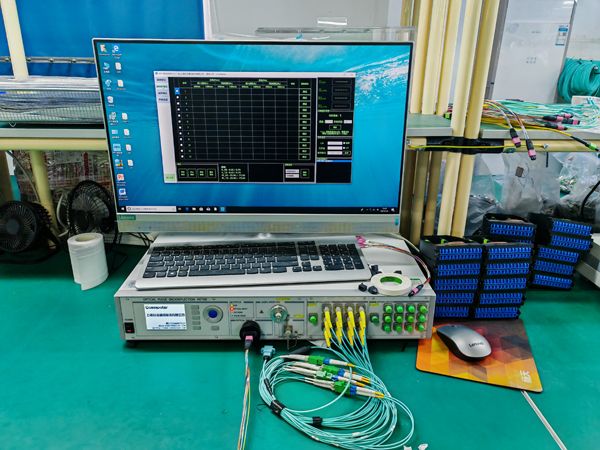
At Yingda, we manufacture our fiber optic patch cords using premium zirconia ceramic ferrules and advanced polishing techniques, ensuring they fully comply with IEC 61753-1 Grade B specifications. By drastically minimizing attenuation, our cords secure maximum signal integrity for your critical data center links.
B2B Buyer Note: Investing in Grade B compliance means future-proofing your network infrastructure against bandwidth bottlenecks.
Standard 2: Telcordia GR-326-CORE – The “Gold Standard” for Carrier-Grade Reliability
For outdoor telecom base stations, aerial deployments, or harsh industrial environments, ordinary patch cords degrade rapidly due to temperature fluctuations and moisture. To filter out unreliable products, global telecom operators look for one vital certification: Telcordia GR-326-CORE. This is universally recognized as the most rigorous environmental and mechanical test standard for single-mode fiber optic connectors.
A patch cord that claims GR-326-CORE compliance must survive a series of “hellish” laboratory testing cycles, including:
- Thermal Aging & Cycling: Extended exposure to extreme temperatures ranging from -40°C to +75°C.
- Humidity/Condensation Tests: Sustained high-humidity environments to test moisture resistance.
- Mechanical Endurance: Strict vibration, flex, twist, and impact tests to simulate years of field stress.
At Yingda, our carrier-grade fiber patch cords are engineered to fully endure the GR-326-CORE testing criteria. By utilizing ultra-reliable aramid yarn (Kevlar) strain relief and premium-grade outer jackets, our cables guarantee a service life of over 10 to 15 years in volatile outdoor deployments, drastically lowering your long-term maintenance costs (OPEX).

Standard 3: IEC 61300-3-35 – Zero Tolerance for End-Face Contamination
Did you know that over 85% of fiber optic network failures are caused by dust, scratches, or contamination on the connector end-face? The IEC 61300-3-35 standard was specifically created to solve this industry-wide headache. It defines precise inspection and pass/fail criteria for the fiber core, cladding, adhesive zone, and contact zone under visual magnification.
The standard divides the connector tip into 4 distinct microscopic zones:
- Zone A (Core Zone): Absolutely zero scratches or defects are permitted.
- Zone B (Cladding Zone): Strict limitations on the size and quantity of permissible scratches and pits.
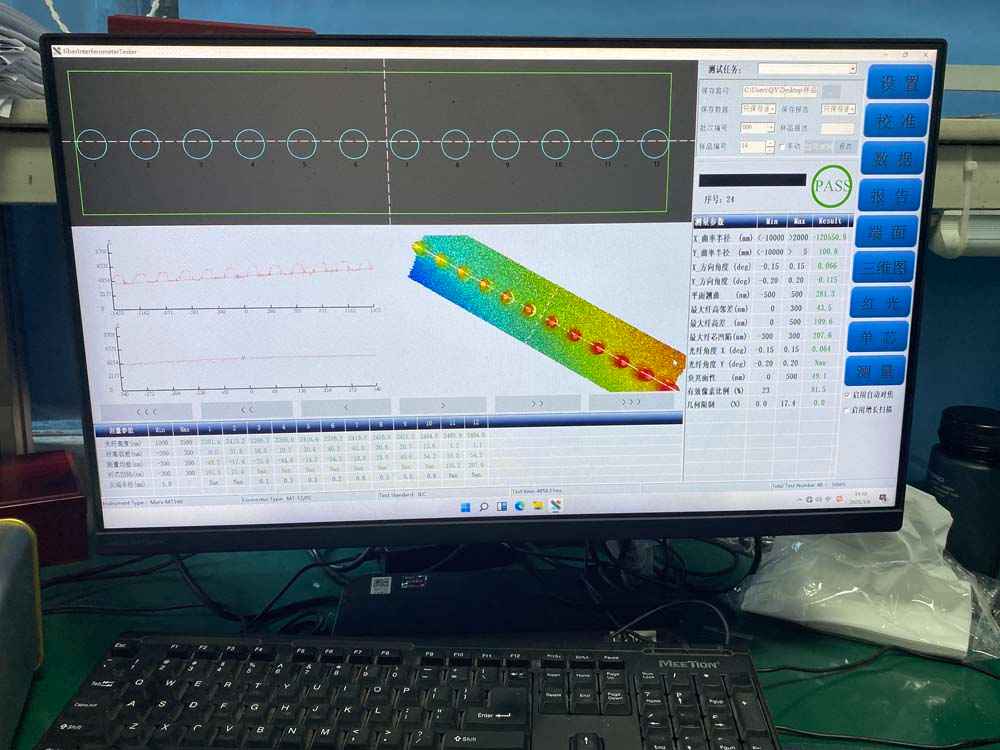
To ensure strict compliance with IEC 61300-3-35, our production line utilizes digital 3D geometric interferometers and high-resolution automated end-face inspectors. Every single fiber patch cord shipped from Yingda undergoes a 100% inspection. We provide a comprehensive factory test report with each batch, giving you peace of mind that your shipment is completely flawless and ready for immediate deployment.
Standard 4: TIA-568.3 – Ensuring Flawless Color Coding and Polarity
In large-scale data center structured cabling, managing hundreds of fiber connections can easily lead to costly human errors during installation. The TIA-568.3 standard (developed by the Telecommunications Industry Association) sets the global rulebook for fiber optic cabling components, color coding, and polarity management.
TIA-568.3 explicitly standardizes the color-coding framework for quick identification:
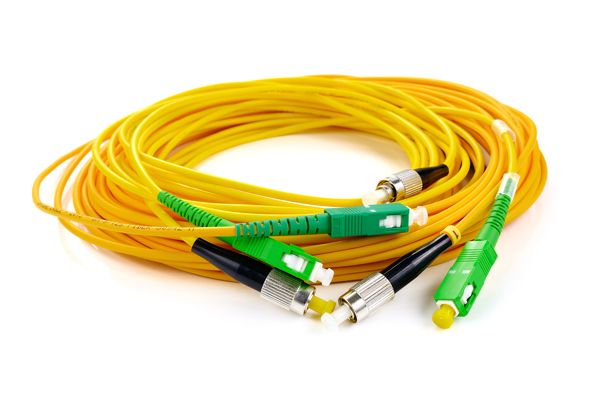
- OS2 Single-mode: Yellow jacket.
- OM3 Multimode: Aqua jacket.
- OM4 Multimode: Erika Violet (or Aqua) jacket.
- Polarity Management: Defines Method A, Method B, and Method C to ensure that the transmitter (TX) on one end perfectly connects to the receiver (RX) on the other.
By strictly manufacturing under TIA-568.3 protocols, Yingda ensures absolute consistency in jacket color and internal wiring polarity across all batch orders. When your on-site engineering team unboxes our patch cords, the uniform color coding enables plug-and-play identification, eliminating polarity errors and speeding up project deployment timelines by up to 30%.

Standard 5: RoHS & REACH Compliance – Your Gateway to European & Global Markets
For modern international procurement, environmental safety is no longer optional—it is a strict legal requirement. If your infrastructure project involves the European Union or strict multinational corporations, your fiber optic components must fully adhere to RoHS (Restriction of Hazardous Substances) and REACH (Registration, Evaluation, Authorization and Restriction of Chemicals) standards.
These regulations strictly prohibit or limit heavy metals and toxic chemicals (such as lead, cadmium, and polybrominated biphenyls) in the plastic jacket and internal components. Furthermore, corporate indoor projects often demand LSZH (Low Smoke Zero Halogen) materials to prevent toxic gas emissions in the event of a fire.
Yingda is fully committed to sustainable, green manufacturing. All raw materials used in our factory—from the outer PVC/LSZH jackets to the inner ceramic ferrules and epoxy adhesives—are 100% RoHS and REACH certified. Choosing our compliant products ensures a seamless customs clearance process and aligns your project with global environmental mandates.

Conclusion
Standards signify more than just certification; they reflect production processes and quality control (QC). As a professional B2B fiber optic manufacturer, Yingda strictly adheres to the five major international standards mentioned above to provide OEM/ODM solutions to global customers.
Planning an upcoming telecom project?
Send us your fiber specifications (Singlemode/Multimod, LC/SC/MPO), and our compliance engineers will provide a verified quotation and standard certification list within 2 hours.