Skip to content
As we know that, LWDM means Fine Wavelength Division Multiplexing, it is different from CWDM, DWDM, MWDM. In the official standard definitions of IEEE and ITU-T, there are a total of 12 wavelengths in the complete LAN WDM wavelength grid.
However, in actual commercial implementation and application in the optical transceiver module industry, it is usually cut into 4 waves, 8 waves, or 12 waves according to different development stages and application scenarios.
To avoid confusion, we can use the clearest “application evolution” logic to thoroughly count it:
100G/200G/400G Era: The Most Popular “Golden Four Waves”
If you are buying the most common 100G LR4/100G ER4 optical transceiver module on the market, or 400G LR8 (using two sets of four waves), the equipment manual usually only mentions four wavelengths. Their wavelength spacing is about 4.5 nm (frequency spacing of 800 GHz):
- 1295.56 nm
- 1300.05 nm
- 1304.58 nm
- 1309.14 nm (commonly known as 1311nm, also 1309.20nm)
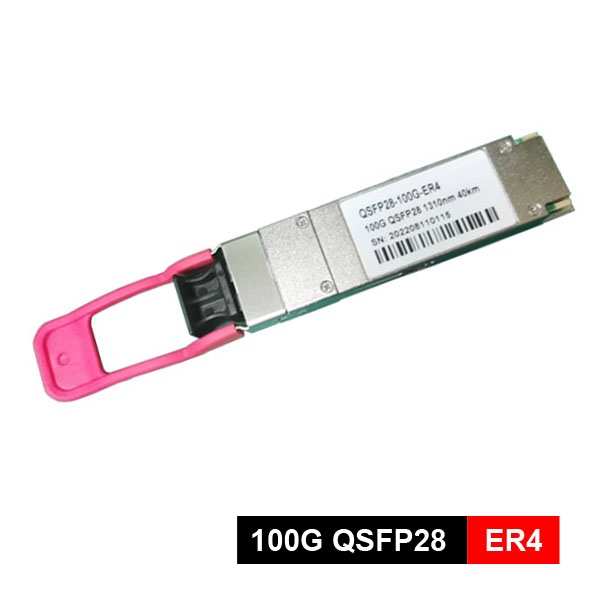
100G QSFP28 ER
- Transmission distance: 40km
- Transmitter: 4XLWDM EML
- Receiver: 4xAPD
- Tx power:-2.5~4.5dBRx sensitivity:<-18.5dBm
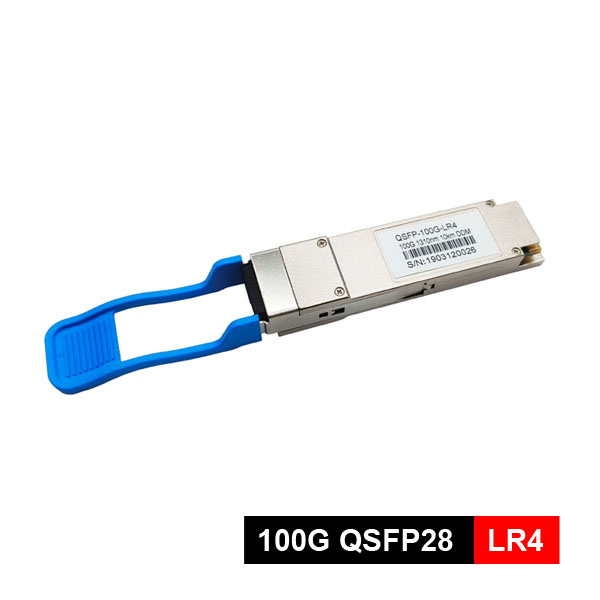
QSFP 100G LR4 S
- Transmission distance: 10km
- Transmitter: 4XLWDM EML
- Receiver: 4xPIN
- Tx power:-6.2~2.5dBRx sensitivity:<-11.5dBm

400GBASE LR8
- Transmission distance: 10km
- Transmitter: 8XLWDM EML
- Receiver: 8XPIN
- Tx power:-2.8~+5.3dBRx sensitivity:<-9.1dBm
800G Era: Extended “Classic 8 Waves”
When optical modules need to evolve towards higher capacity (such as 800G LR8), or early 40G carrier networks require more channels, the standard organization shifted towards lower wavelengths on the basis of the above four waves and added four more channels, forming a total of eight wavelengths:
- Added 4 waves: 1273.54 nm, 1277.89 nm, 1282.26 nm, 1286.66 nm
- Add the original 4 waves to form an 8-channel LAN-WDM, that is: 1273.54 nm, 1277.89 nm, 1282.26 nm, 1286.66 nm, 1295.56 nm, 1300.05 nm, 1304.58 nm, 1309.14 nm.
5G Fronthaul and Gigabit/ 10 Gigabit Convergence: the ultimate 12 waves full of blood
In 5G fronthaul networks (especially in the 25G LWDM fronthaul genre led by Chinese operators), in order to squeeze out as many channels as possible in a single fiber to save fiber resources, the IEEE 800GHz grid is completely filled, forming a complete set of 12 wavelengths.
These 12 wavelengths are neatly arranged in the low dispersion region of the O-band (1260nm~1360nm), and the specific list is as follows (all included in the current IEEE 802.3 specification):
| Channel | Accurate center wavelength | Channel abbreviation |
| Ch 1 | 1269.23 nm | Leftmost reference wave |
| Ch 2 | 1273.54 nm | (Starting point of the 8-wave plan) |
| Ch 3 | 1277.89 nm | |
| Ch 4 | 1282.26 nm | |
| Ch 5 | 1286.66 nm | |
| Ch 6 | 1291.10 nm | |
| Ch 7 | 1295.56 nm | (Starting point of the 4-wave plan) |
| Ch 8 | 1300.05 nm | |
| Ch 9 | 1304.58 nm | |
| Ch 10 | 1309.14 nm | 1310nm/1311nm collectively referred to as waves |
| Ch 11 | 1313.73 nm | |
| Ch 12 | 1318.35 nm | Rightmost cutoff wave |
Conclusion
The physical grid defined by the LAN-WDM standard has a total of 12 wavelengths.
But in the 100G/400G optical transceiver modules of the data center, we only use four of them (1295-1309nm); 8 waves will be used in the 800G optical transceiver module; Only in 5G fronthaul networks, will all 12 waves be fully utilized. ”