 Skip to content
When wiring an 800G network, you are no longer facing traditional cable connections, but a system that is extremely sensitive to signal attenuation, heat dissipation pressure, and physical space.
Here are 5 key dimensions that must be considered when wiring an 800G network:
Transmission distance and medium selection (core factors)
800G has extremely low tolerance for insertion loss, and the distance directly determines your wiring architecture:
- 0-2 meters (inside the rack): DAC patch cable is preferred. The lowest cost, but the cable is extremely thick and hard, requiring sufficient bending radius space to be reserved.
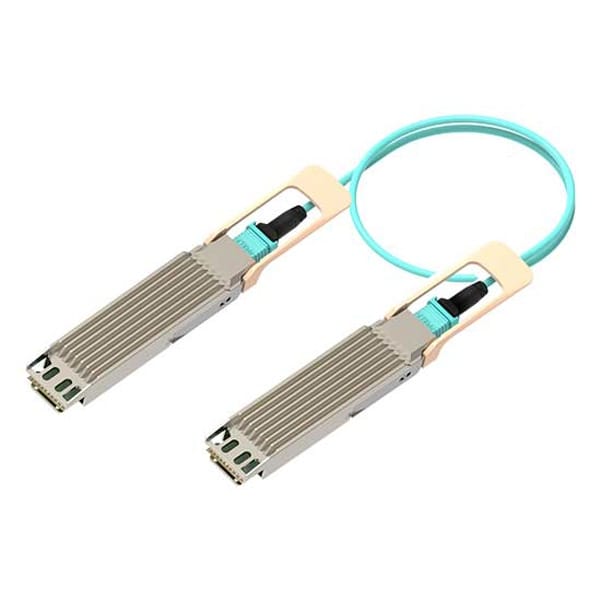
- 2-7 meters (adjacent rack): It is recommended to use AEC. It is thinner than DAC, cheaper than AOC, and solves the pain point of short transmission distance of 800G copper cable.
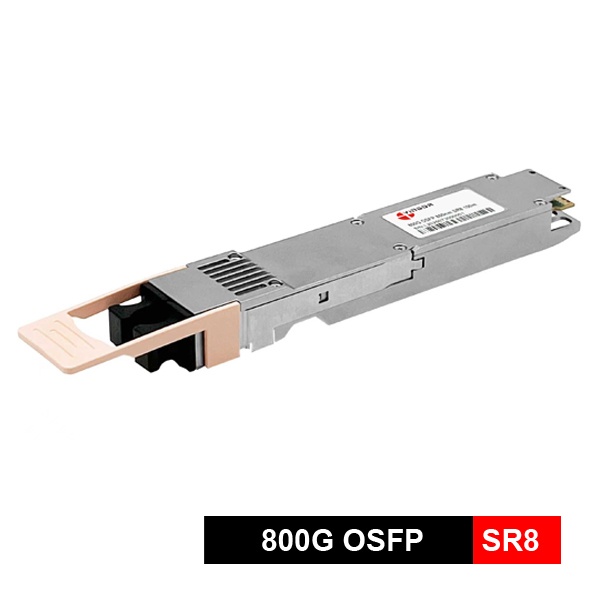
- 7-100 meters (rack spacing): Use AOC active optical cable or multimode fiber (like SR8 transceivers, MPO OM3/OM4 patch cable).
- Over 100 meters (across data centers): Single mode fiber optic cable (like DR8/FR8 transceiver, MTP trunk cable) must be used.
Heat dissipation and power consumption challenges
The 800G fiber module is a “heat sink” (a single module can reach 14W-18W), and wiring will directly affect the heat dissipation of the cabinet:
- Airflow blockage: The 800G DAC patch cable is very bulky, and stacking it in large quantities can block the air ducts of the switch backplane, which may cause equipment overheating and frequency reduction.
- Package selection: OSFP package comes with heat sink, which has better heat dissipation performance than QSFP-DD. If the cooling capacity of the computer room is limited, priority should be given to OSFP or LPO (low-power) solutions.

Wiring density and physical space
800G ports typically correspond to high-density GPU or server clusters:
- Bending radius: The 800G copper cable is made very thick to resist interference. If the depth of the cabinet is insufficient, forcibly bending the cable can cause packet loss or even damage.
- Cable weight: The weight of the entire 800G DAC patch cable is astonishing, and the load-bearing capacity of the cable tray above the cabinet must be checked.
Extremely low latency requirements (for AI/HPC scenarios)
If your 800G network is designed for AI training clusters, latency is the lifeline:
- Reduce processing steps: Within short distances, DAC coaxial cable has the lowest latency (almost zero), followed by LPO (removing DSP processing steps), and finally traditional AOC ethernet cable.
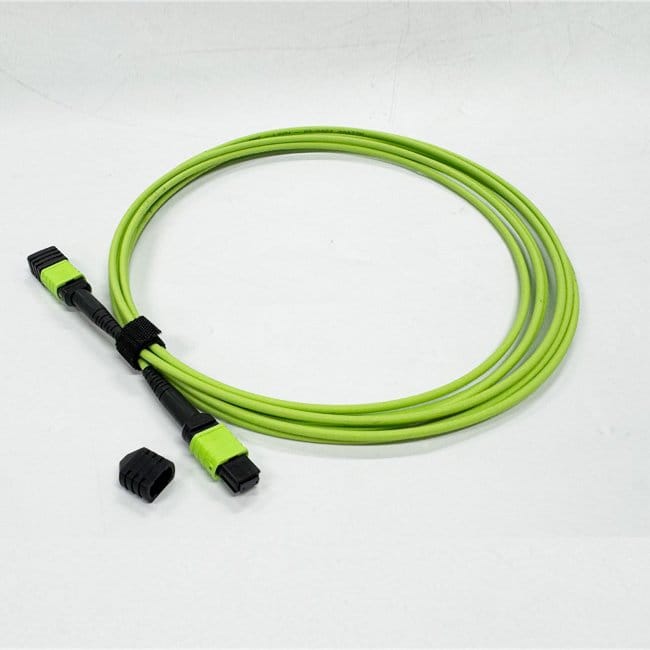
- Fiber polarity management: 16 core MPO jumpers are commonly used for 800G cables, and incorrect polarity (Type A/B/C) configuration can cause the link to be disconnected. Therefore, a unified standard must be established during the design phase.
Breakout requirements for ports
800G core switches typically require backward compatibility:
- 1 point N solution: Consider whether it is necessary to split one 800G port into 2x400G or 8x100G. This requires matching corresponding breakout cables when wiring, and confirming whether the switch ports support this logical splitting.
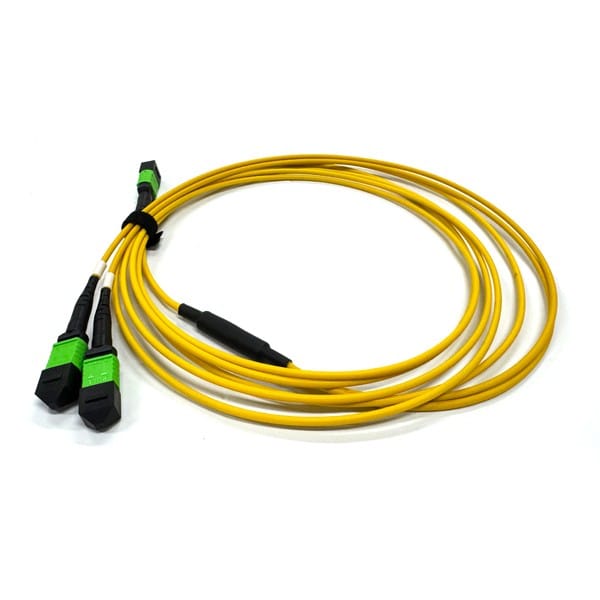
MO-16 APC-2xMPO-12 APC Patch Cable
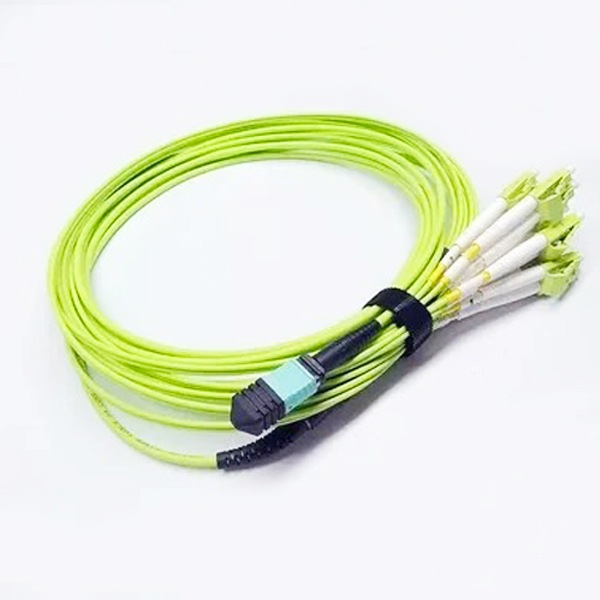
MPO-16 to LC Breakout Cable
How to choose the right 800G products?
Based on the above analysis, the main considerations and results summarized by Yingda are shown in the following table:
| considerations | Copper cable (DAC / AEC) | Fiber optic (AOC Ethernet Cable / optical module) |
| Heat dissipation impact | Serious (physical obstruction of airflow) | Light (thin cable) |
| Deployment difficulty | Difficult (hard, heavy, difficult to bend) | Easy (light, soft) |
| maintenance cost | Low (no optical loss issue) | High (pay attention to cleaning the fiber end face) |
Is your current cabling environment a newly built AI computing center or an upgraded 800G link based on an existing data center?
Yingda can provide DAC, AEC, AOC and other high-speed cables, as well as supporting optical modules, MPO jumpers and CS / LC duplex patch cords to meet your wiring needs for different transmission distances. CONTACT US FOR INQUIRY >>>