The 800G optical module is the core interconnection solution for current ultra large scale data centers and AI computing networks, and is moving from technical reserves to large-scale deployment stage. It doubles the bandwidth again on the basis of 400G, which is the key to achieving high-speed interconnection of GPU clusters with tens of thousands of cards. Driven by the explosive growth in bandwidth demands such as AI big model training and high-performance computing, 800G has become the standard configuration for the next generation of data center networks.
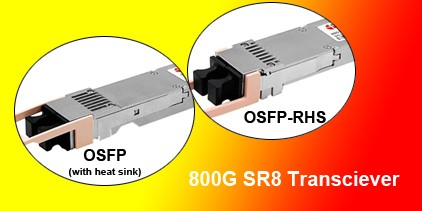
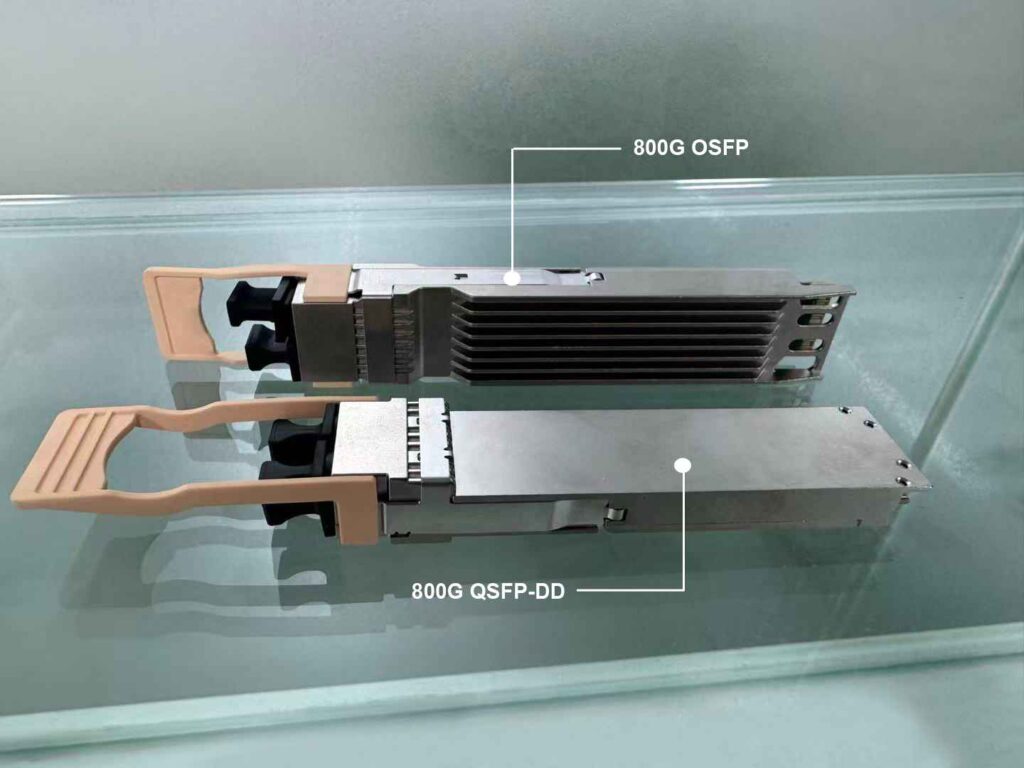
There are currently two competing and coexisting packaging forms for 800G optical modules: QSFP DD or OSFP. The choice often determines the direction of the hardware ecosystem:
OSFP (Octal Small Form Factor Pluggable)
QSFP-DD (Double Density)
Yingda is a Chinese optical module cable manufacturer and wholesaler, we committed to providing customers with optical modules with stable quality. No matter how the market changes, quality is always the first priority. With long-term stable supply chain support and mature cost control, Yingda share the extra benefits with customers and promise to provide customers with the best quality and most competitive price and services, so that customers can stand out from many competitors.
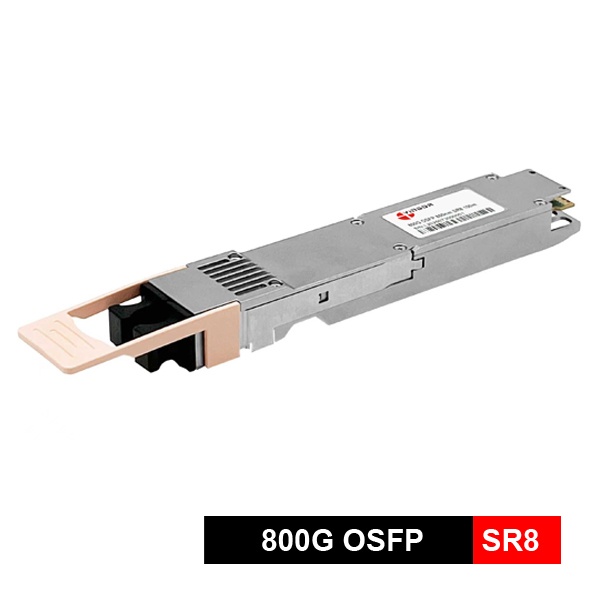
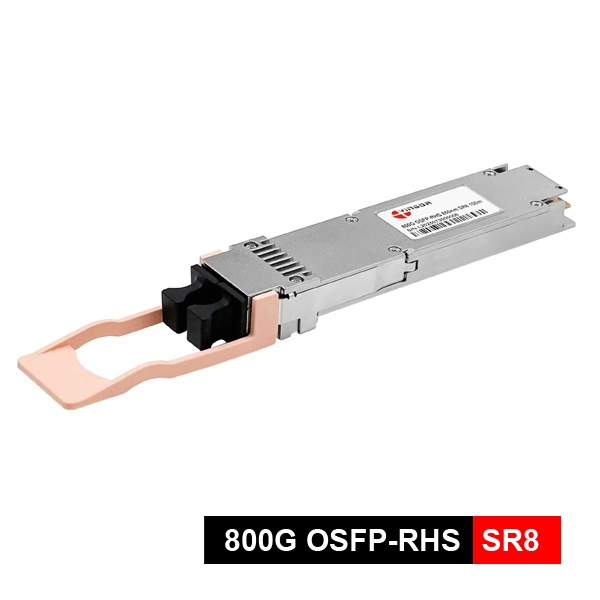
According to the transmission distance, 800G optical modules can be divided into SR8, 2XSR4, DR8, 2XFR4, 2XLR4, etc. Their specific technical parameters are shown in below table:
Model | Encapsulation | Interface | Fiber type | Distance | Power consupmtion | Typical appliation |
SR8 | QSFP-DD/OSFP | MPO-16 | OM4/5 | 100m(OM4);150m(OM5) | 13-16W | Interconnection within the AI cluster rack |
VF8 | QSFP-DD | MPO-12 | OM4 | 50m | 9W | Short distance high-density scene |
2xSR4 | QSFP-DD/OSFP | MPO-12/16 | OM4/5 | 100m(OM4);150m(OM5) |
| Short distance connection inside the cabinet (AI server) |
DR8 | QSFP-DD/OSFP | MPO-16/MPO-12 | OS2 | 500m | 16-17W | Ridge leaf architecture, AI training cluster |
2xFR4 | QSFP-DD/OSFP | Duplex LC/ Duplex CS | OS2 | 2km | ~16.5-18W | Data center interconnection, campus network |
2×LR4 | QSFP-DD/OSFP | Duplex LC | OS2 | 10km | 16-18W | Metropolitan area network and park interconnection |
LR8 | QSFP-DD/OSFP | Duplex LC | OS2 | 10km |
| Park level long-distance interconnection |
ZR/ZR+ | QSFP-DD | Simplex LC | OS2 | 80-120km+ | 25W+ | Long distance DCI, metropolitan backbone |
✅Kind Notes:
The 800G optical module is the core infrastructure of data center networks in the AI era. The selection should follow the principle of first determining the distance, then selecting the packaging, and finally weighing the power consumption to choose the appropriate optical module for the application scenario.
Step 1:
Step 2
Step 3
Step 4
DR8 supports branching to 2 x 400G DR4 or 8 x 100G DR1, making it easy to deploy mixed rate networks and an important feature for phased upgrades.
800G is a necessary route to 1.6T, with two main technical paths:
The current mainstream view tends towards the second path, which is to develop 200G PAM4 per lane technology through 4 channels, each running 200G PAM4 signals. This can significantly reduce the number of lasers, lower costs and power consumption, and is the focus of evolution for 2024-2025. At present, the most mature and widely used technology is achieved through 8 channels, each running 100G PAM4 signals to achieve a transmission rate of 800G. The 800G OSFP DR8 architecture is widely regarded as having the potential to smoothly evolve towards 1.6T due to its parallel design.
Mass production of products with short lead times.
Yingda optical module are the most competitive price based on the best quality. We keep long term reliable in-between-after sales service.
Yingda can provide 800 OSFP SR8 modules in bulk.
The internal structure of the commonly used for 800G transceivers currently are 8 channels parallels optics, each of which runs 100G PAM4 electrical signals, a single wave rate is 106.25Gb/s,so a total of 8 channels totaling 800G.
There are two networking in computing center: IB protocol, Ethernet protocol
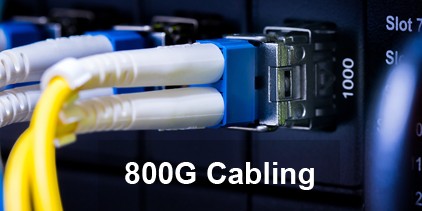
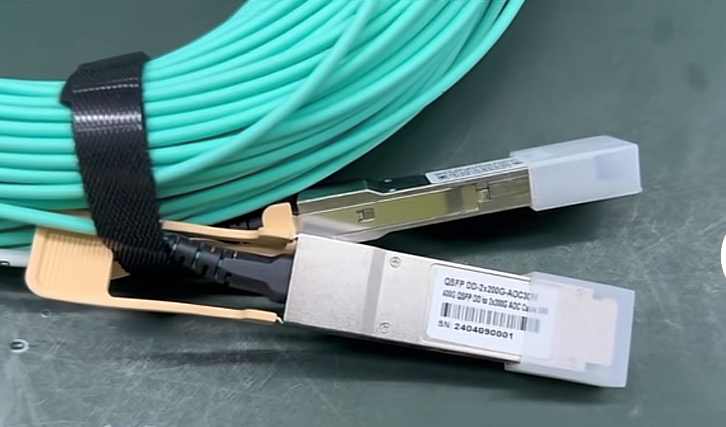
Short distance connections within 30 meters of the same rack or adjacent racks can be directly connected using DAC or AOC cables. If it is over 50 meters, recommended to insert an 800G DR8 or SR8 module on the switch side, split it into 2 MPO interfaces through MTP/MPO fanout cable, and connect them to two 400G modules (such as 400G DR4/SR4).
Yingda has 13 years of professional optical module research and development, and has 130 compatibility testing equipment and a complete compatibility database to meet diverse needs. It is compatible with different brands of equipment such as Minos, NVIDIA CX6 and CX7 network cards.
800G QSFP DD optical transceivers are mainly used in domestic Huawei, H3C, Ruijie 800G switches, or deepseek all-in-one machines. It has perfect technology, and the test is carried out with DVC all-in-one machine.
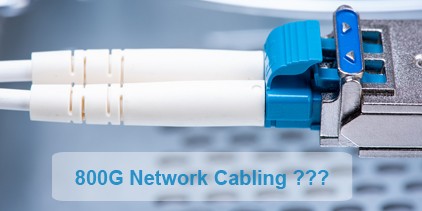
The key to connecting the 800G port to the 400G network is to ensure that the single wave rate of the 800G module matches that of the 400G module (currently the mainstream is 100G PAM4). Select the corresponding module based on the required transmission distance and fiber type. Use DR8 module and DR4 module for 500m-2km, connect with MPO-16 to 2xMPO-12 jumper. If 50-100m, choose SR8 and SR4 module, connect with MPO OM3 OM4 jumper. For distances exceeding 2km, it is recommended to use FR4 optical modules and lc to lc fiber patch cable single mode duplex.
High productivity efficiency, skilled front-line operators and strict production control ensure timely delivery.
High-precision testing equipment and top industry quality control system ensure high quality standards.
Long-term stable supply chain and cost control that changes in line with market trends ensure the best price

Sorry that there’s no information that interests you. Please fill in the feedback form so that we can improve.