Skip to content
“Breakout connections” is typically referred to 1-to-4 or 1-to-2 breakout, which primarily occur in high speed SFP modules (e.g., 40G, 100G, 400G) utilizing the QSFP form factor.
Standard SFP and SFP+ modules, containing only a single internal channel, cannot directly “split” their optical paths; consequently, they cannot function as the transmitting end in a breakout configuration. However, they can serve as the receiving end, interfacing with the breakout cables split off from high-bandwidth QSFP modules.
The following outlines the optical module models, cable types, and core implementation methods that support breakout connections:
QSFP / QSFP28 / QSFP56 Modules (The Primary Solution for 1-to-4 Breakout)
These modules have four independent optical signal channels internally. Logically, they can operate either as a single, unified high-speed channel or be split by a switch into four separate, lower-speed channels.
40G QSFP+ Breakout Series
These 40G QSFP+ modules allow a single 40G port to be split into four independent 10G ports.
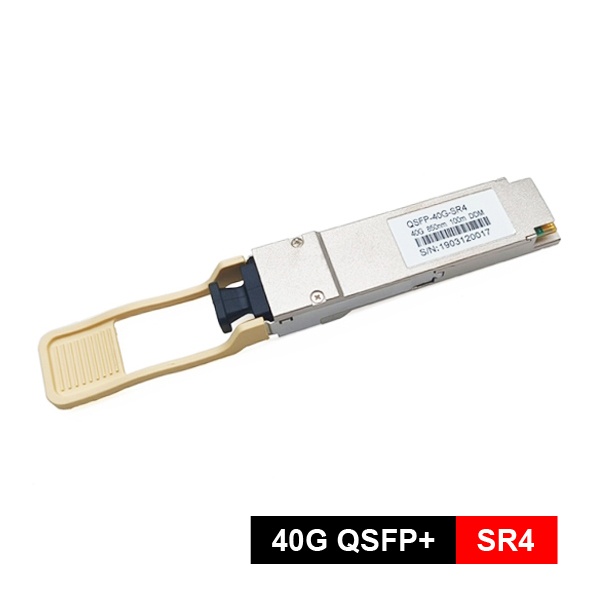
QSFP 40G SR4 C Optical Module
Features an MPO/MTP interface. By utilizing a multimode MPO-to-4x-Duplex-LC breakout cable, it can establish breakout connections to four standard 10G SFP+ SR optical modules.
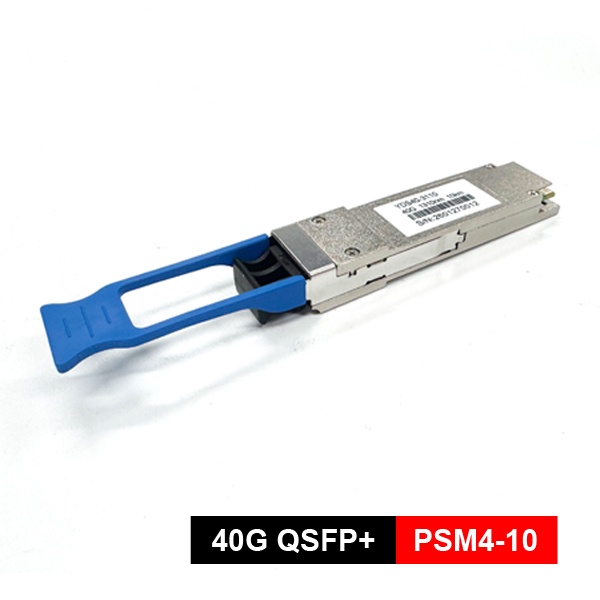
QSFP 40G PSM4 Optical Module:
A single mode 40G MPO fiber module. By utilizing a single mode cable with MPO to LC connector, it can establish breakout connections to four 10G SFP+ LR optical modules, making it suitable for longer-distance breakout applications.
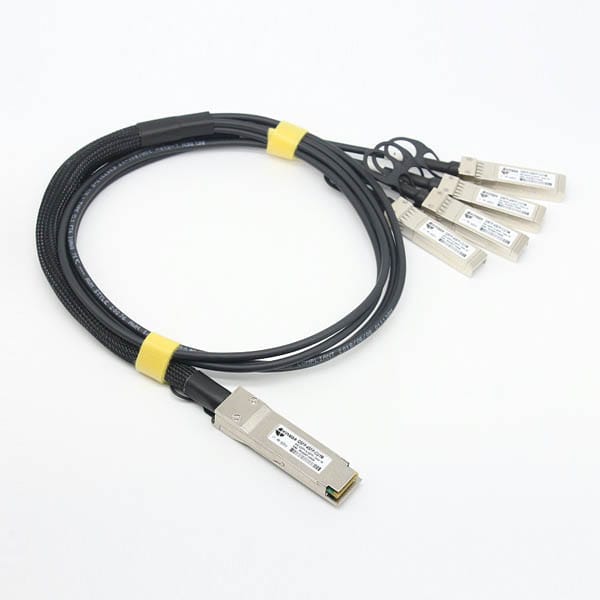
QSFP 4x10G Breakout Cable DAC/AOC:
SFP modules with integrated cabling. One end features a 40G QSFP+ connector, while the other end extends directly into four 10G SFP+ connectors, eliminating the need to purchase additional fiber patch cords.
100G QSFP28 Breakout Series
Enables the splitting of a single 100 Gig SFP port into four independent 25G ports (most commonly used in telecom 5G backhaul and data centers).
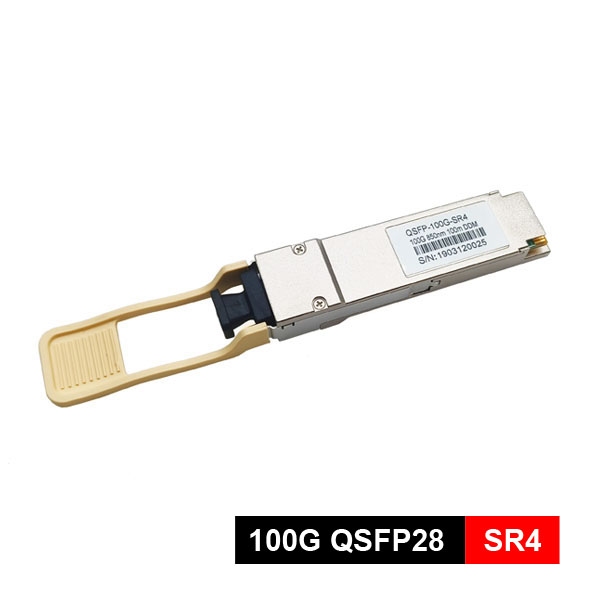
QSFP 100GBASE SR4 Optical Module:
A multimode module utilizing an MPO interface. It enables breakout connections to four 25G SFP28 SR optical modules via an MPO-to-4xLC breakout patch cord.
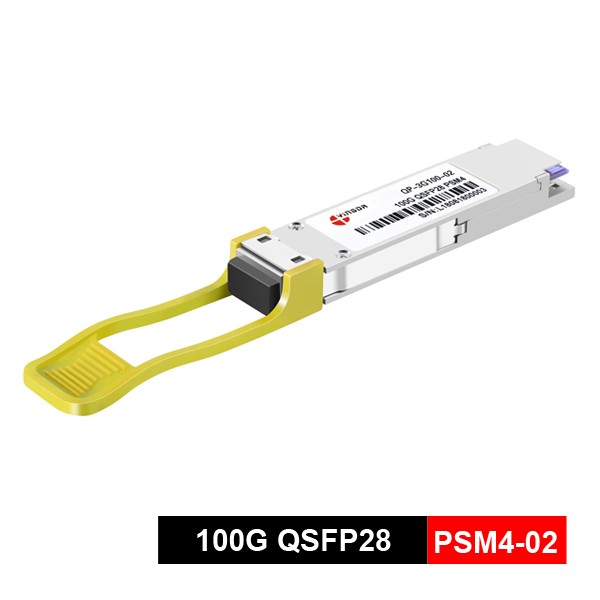
100G PSM4 MSA Optical Module:
A single-mode module with a reach of 500 meters. It enables breakout connections to four 25G SFP28 LR optical modules.
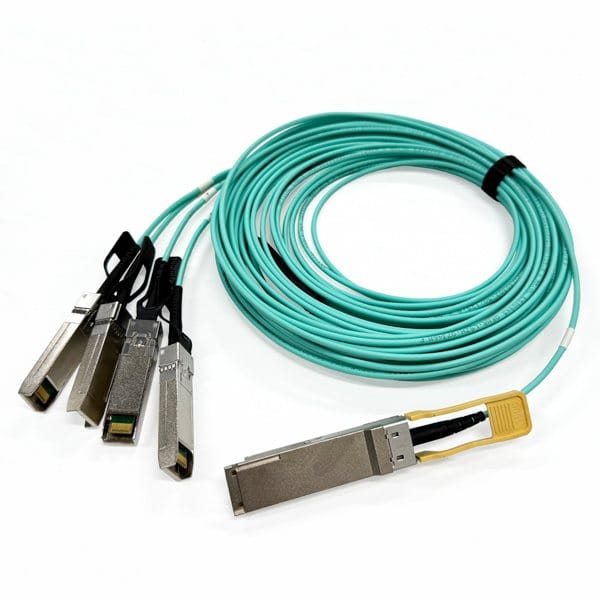
100G QSFP28 to 4x 25G SFP28 DAC/AOC cable:
The most cost-effective solution for high-density breakout connections, frequently used for interconnecting switches and servers (equipped with 25G NICs) within the same cabinet.
200G QSFP56 Breakout Series
Utilizing advanced PAM4 modulation technology, support 1 to 2 or 1 to 4 breakout solutions.
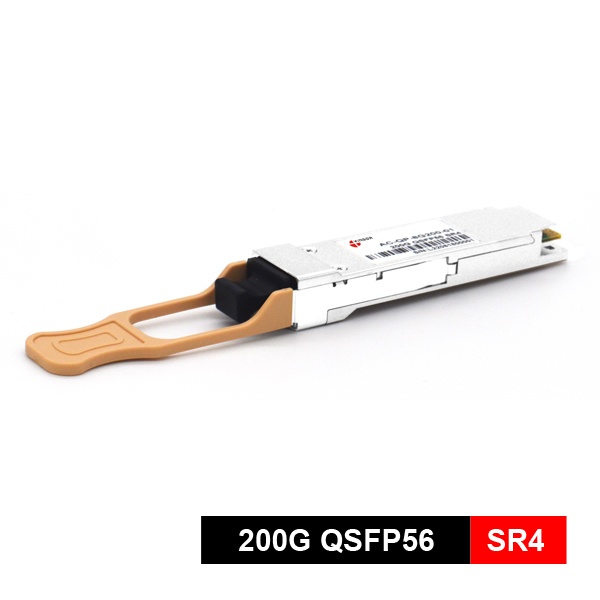
200G QSFP56 SR4 optical module:
A multimoe MTP module with 12 fiber MTP UPC interface. It enalbes breakout connetions to four 50G SFP56 modules via a 12 fiber MTP to LC breakout cable.
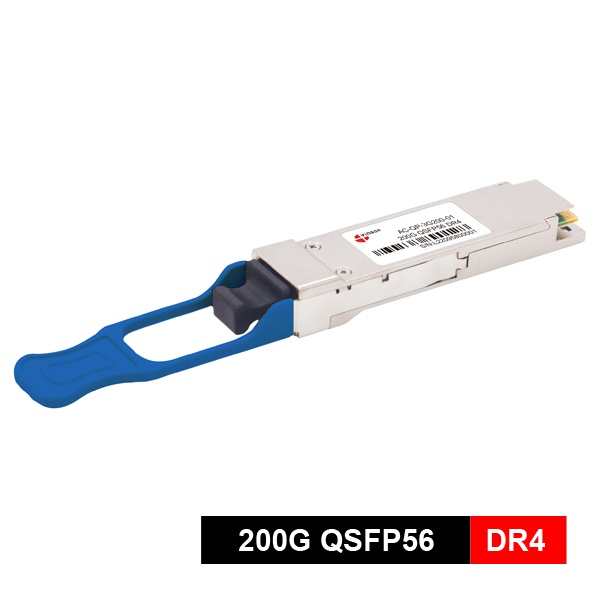
200G QSFP56 DR4 optical module:
A 1310nm module with a reach of 500 meters. It enables 2 types of breakout connections: one is breakout to two QSFP 100G DR modules by a 12 fiber MTP to 2 x LC duplex patch cord, the other is breakout to four SFP56 modules with a 12 fiber MTP to 4 x LC duplex patch cord.
SFP / SFP+ / SFP28 Modules: Function Solely as “Branch-End” Devices
As previously mentioned, standard SFP, SFP+, and SFP28 optical modules are incapable of splitting their own signals into multiple outputs.
- Their Role in Branching Configurations: They must appear in sets of four to receive the four distinct optical signals transmitted from a 40G, 100G, or 200G QSFP port.
- Special Exception (CSFP): The telecommunications industry features a specialized module known as the CSFP (Compact SFP). While retaining the standard SFP form factor, it internally integrates two independent single-fiber bi-directional (BiDi) channels. Utilizing a specialized dual-LC interface, it can split a single input into two outputs to connect with two separate single-fiber media converters or network switches. This represents a highly niche, specialized variant designed specifically for telecommunications applications.
Prerequisites for Breakout Connections
If you intend to configure 1-to-4 or 1-to-2 breakout connections within your network, you must verify the following three points:
1. Switch Hardware and System Support (Critical): Not all switches equipped with QSFP ports support breakout functionality. You must access the switch’s command-line interface (CLI)—for vendors such as Huawei, Cisco, or H3C—and execute commands similar to “port split”or “interface breakout”. If the system software does not support physically splitting the port into 4x10G or 4x25G channels, the connection will fail to establish (i.e., the ports will not power up) even if a breakout cable is inserted.
2. Wavelengths Must Match Exactly: If the QSFP end utilizes multimode 850nm, the corresponding SFP+ receivers at the breakout end must also be multimode 850nm. Mixing single-mode and multimode optics is not supported.
3. Data Rates Must Correspond Precisely: A 40G port can only be fan out into four 10G channels; similarly, a 100G port can only be fan out into four 25G channels (or, on certain specific switch models, forcibly downshifted to break out into four 10G channels).